We don't just enable AI. We ship it.
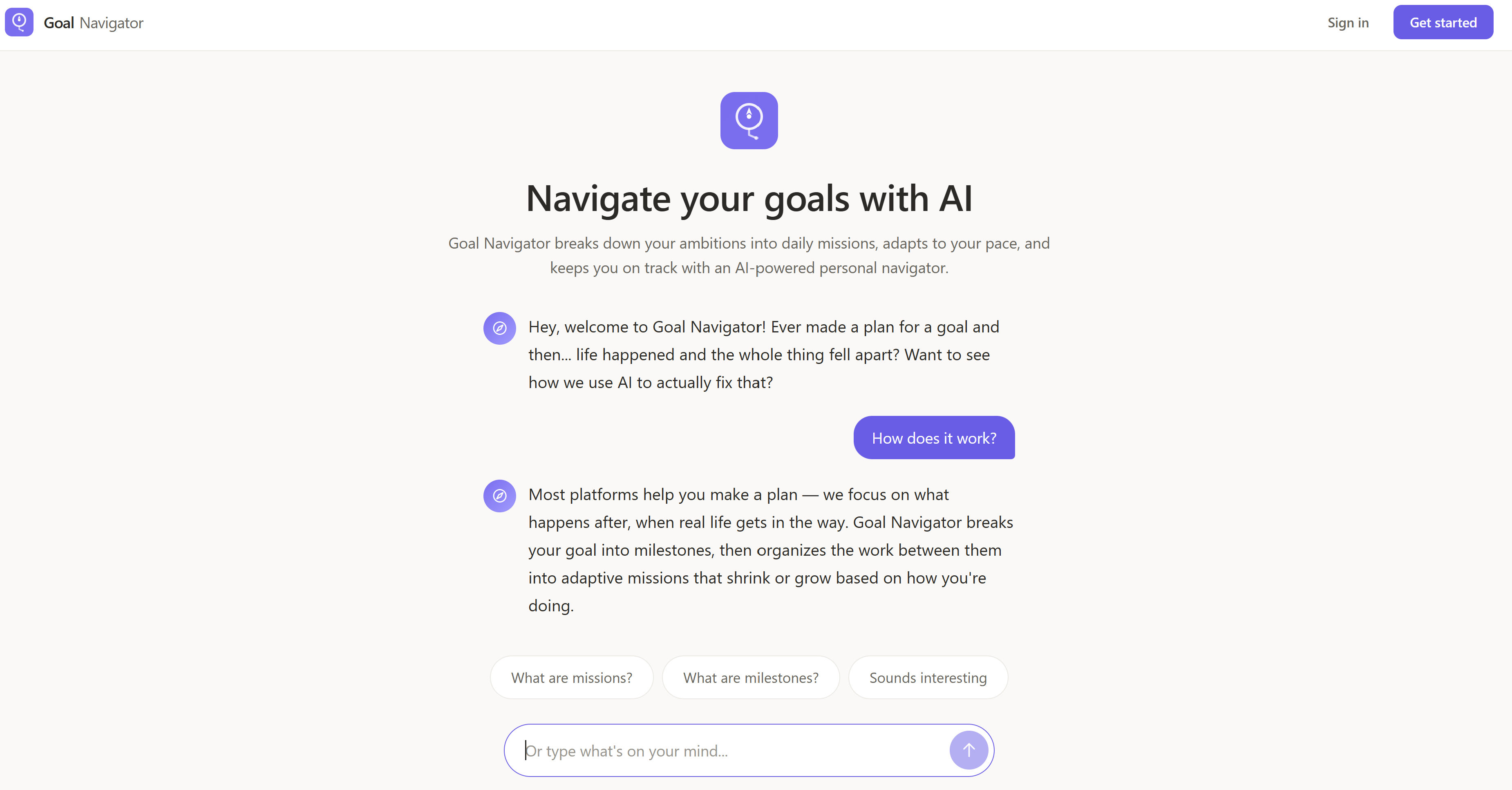
Every story in this library describes work we did for clients — anonymized, as it should be. This one is different. Goal Navigator is our own product: an AI goal-execution coach, live at goalnavigator.ai, running on our own MATE agent platform, with a Claude planning pipeline and an MCP server inside one production ASP.NET application. Click it. Talk to it. This is what we build when nobody is telling us what to build.
Define the destination. Get the daily route. Reroute when life changes.
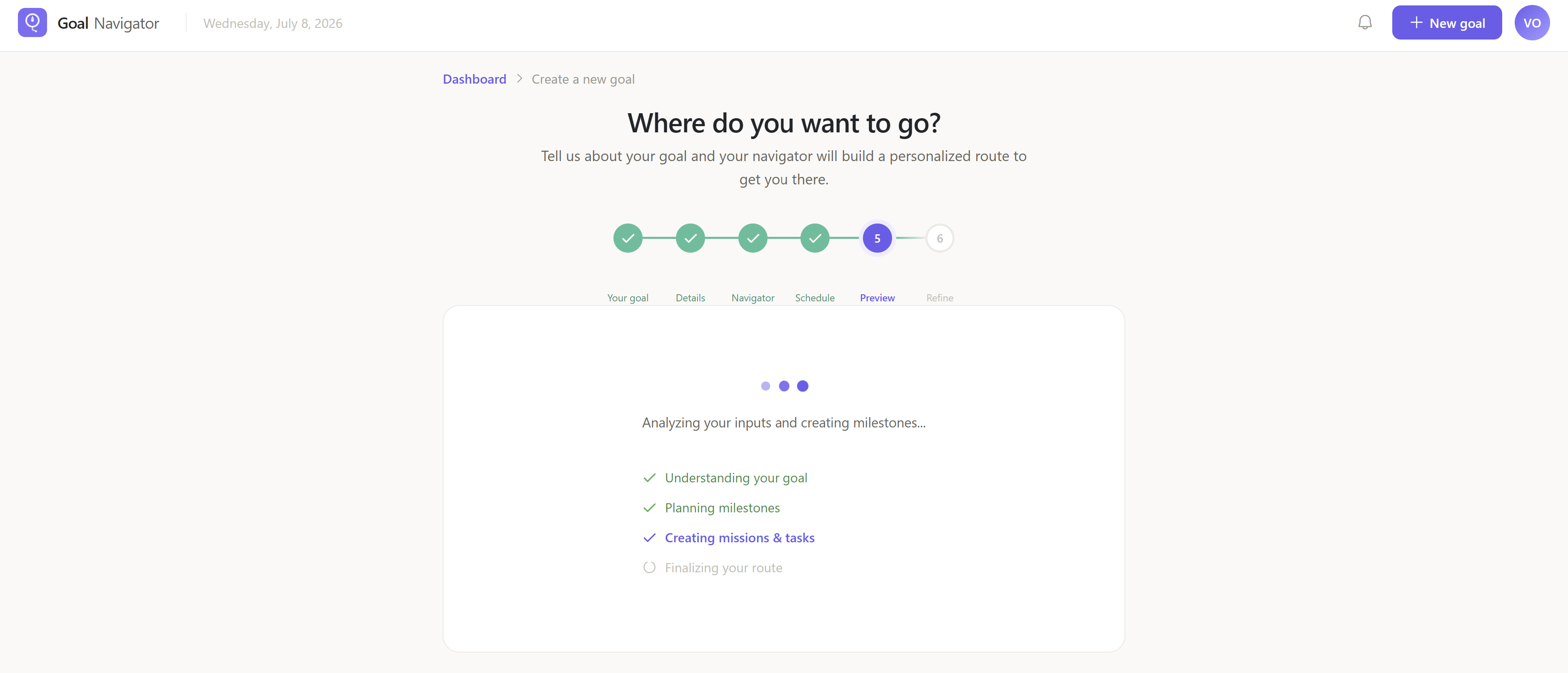
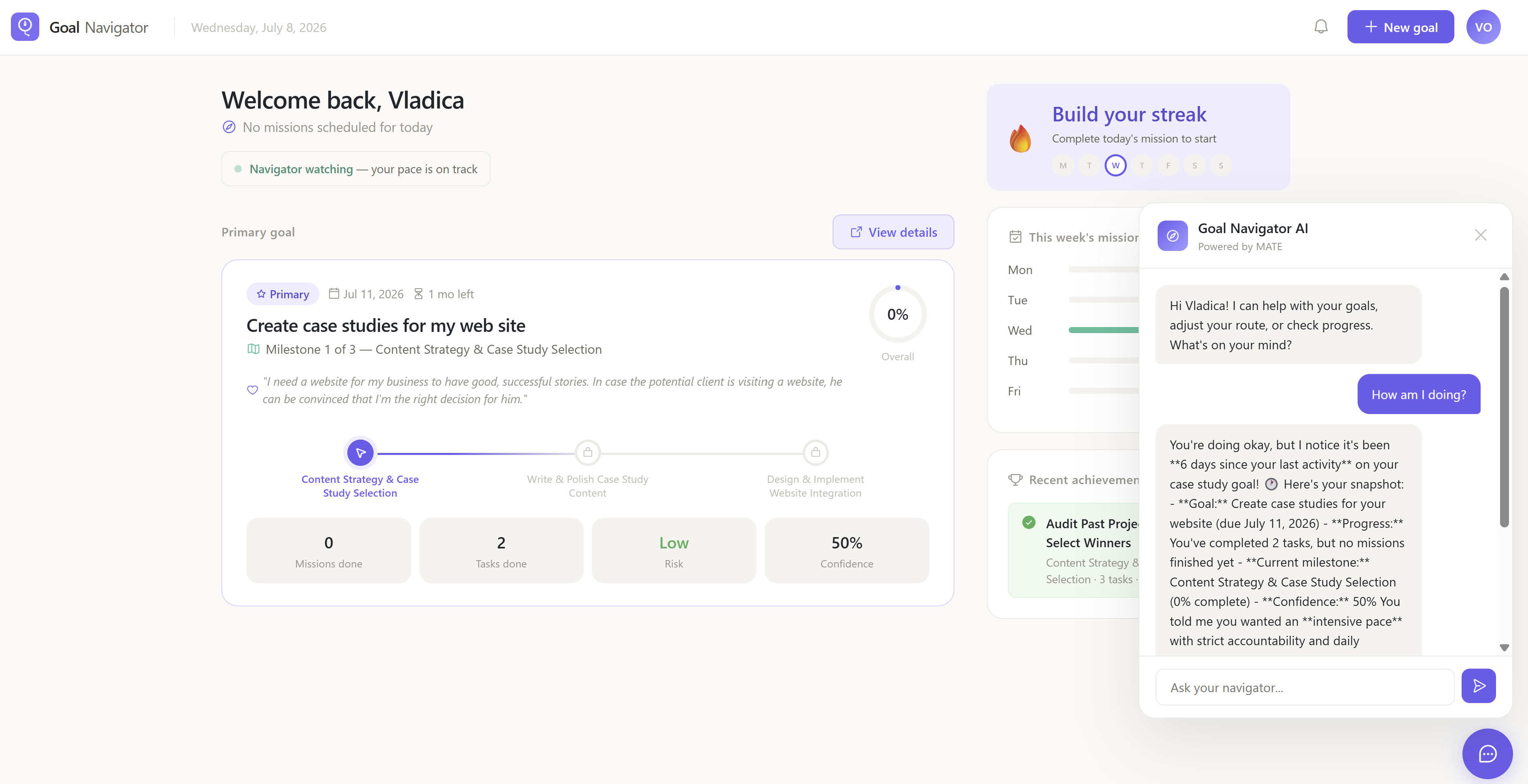
Most goal apps help you make a plan. Goal Navigator is what happens after the plan: AI breaks your ambition into 3–6 milestones, details only the active one, hands you today's mission, and adapts in real time — crushing it? You get more. Life got in the way? It shrinks to one small task that keeps your momentum alive.
Missions, not guilt
Work is broken into adaptive missions sized to your real week. Miss a day and the system reroutes instead of shaming — momentum is the metric that matters.
Notes that make the AI smarter
Navigator Notes after each mission aren't comments — they're intelligence. The next milestone is planned using how the last one actually went.
A navigator with a personality
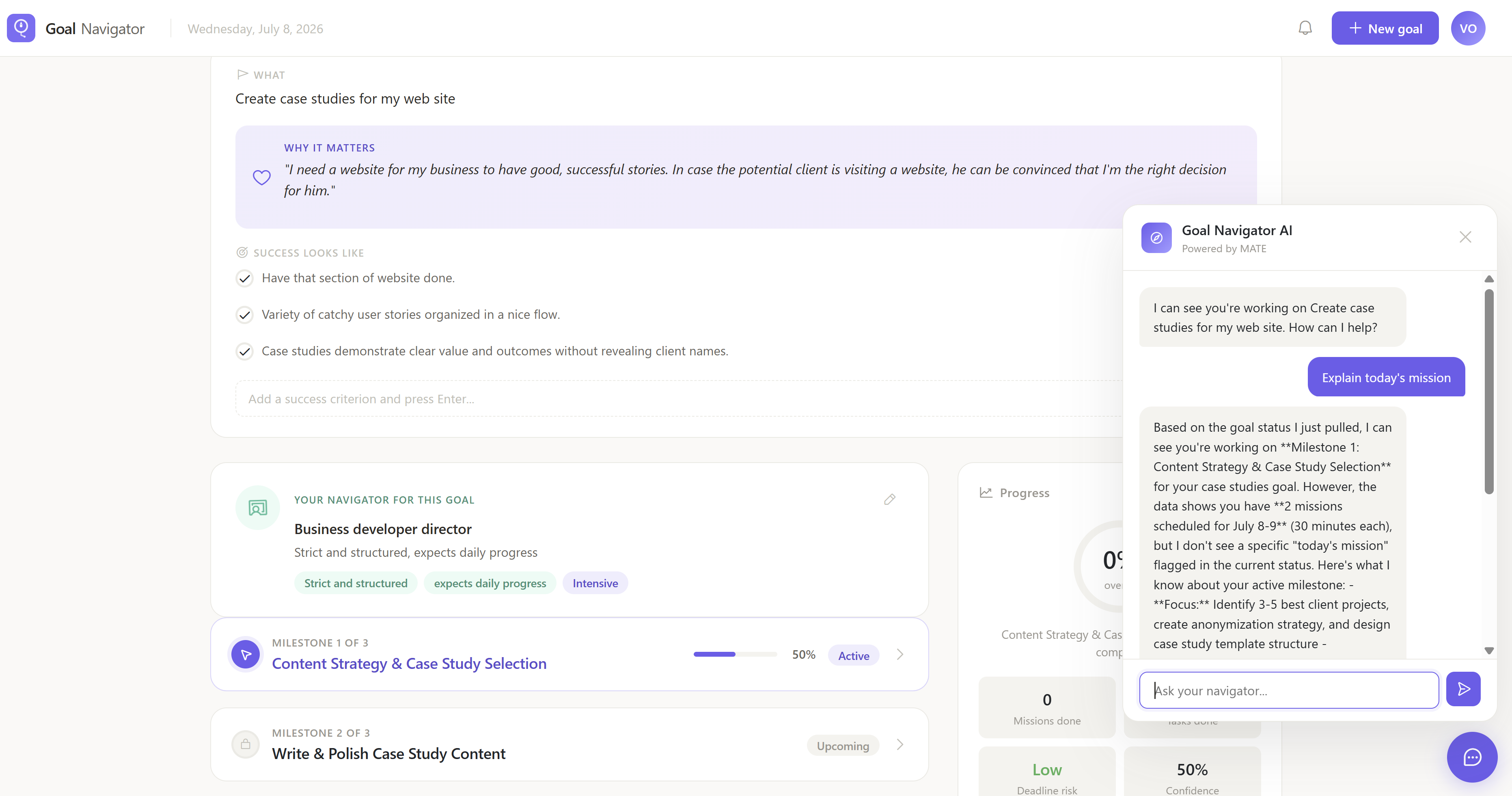
Choose your coach: encouraging, balanced, or strict-and-structured. The persona shapes every conversation and every nudge.
The hybrid architecture we recommend to clients — running in production
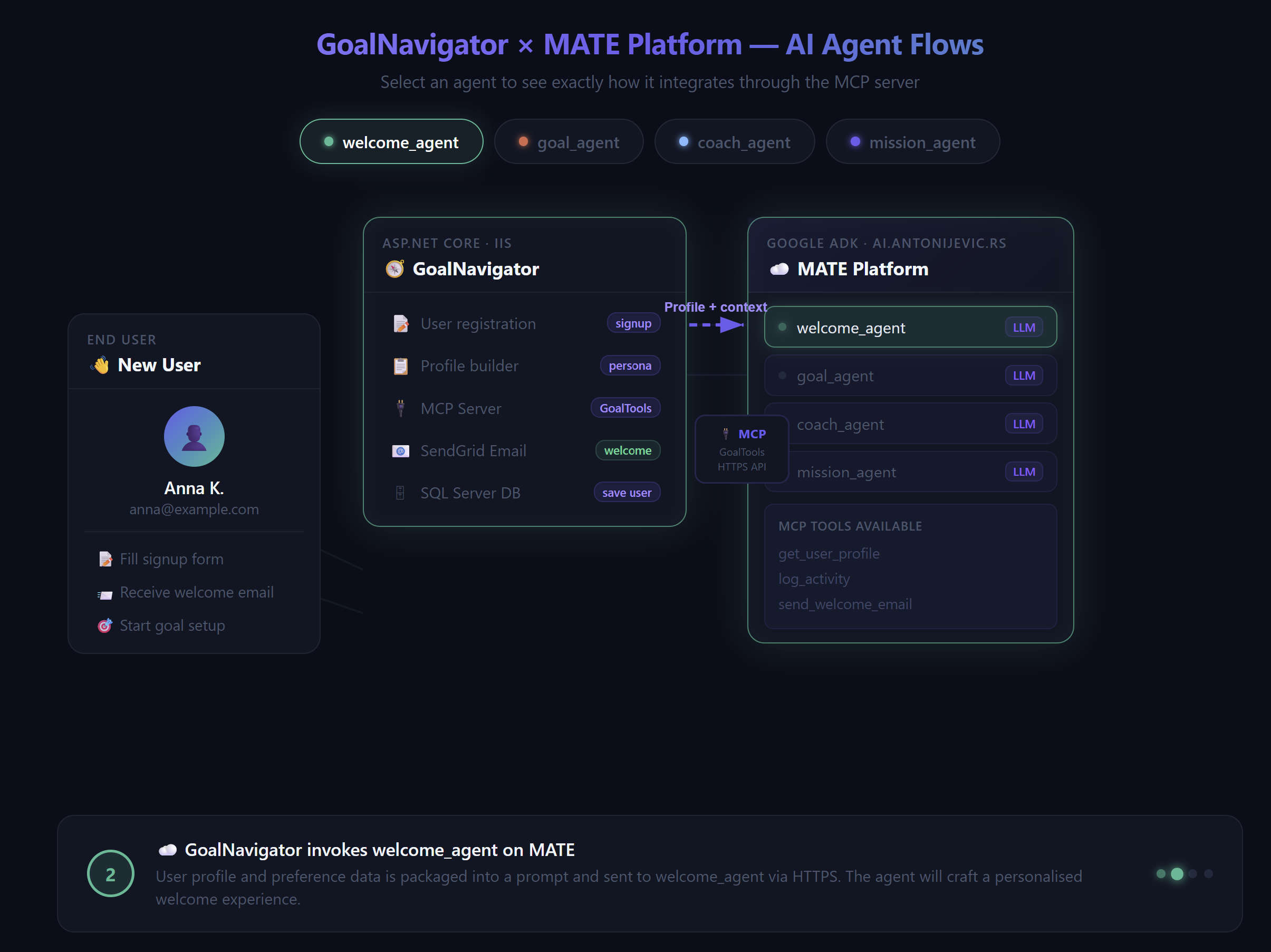
Goal Navigator deliberately uses two AI systems: MATE agents own every conversation; a direct Claude pipeline owns structured planning. That split — conversational platform beside existing AI investment — is exactly what we install in client products. Here it is with the hood open.
Context the browser can't fake
The coach knows your goals because the server injects context — progress, streak, today's mission — behind the scenes. The browser never sees or controls it. Trustworthy agents are an architecture, not a prompt.
Agents with governed hands
MATE agents reach product data through an MCP server with per-agent API keys, a strict tool allowlist, and an audit log of who called what. Read-only first; write actions only as they earn trust.
Costs tracked from day one
Every AI operation logs tokens, model, operation type, and estimated cost — per user, per goal. You can't run AI as a business without knowing what each feature costs.
Full disclosure: the case-study library you're reading was planned in Goal Navigator — three milestones, six tasks, a strict "Business Developer Director" navigator watching our progress. We use what we build.The most honest product endorsement we can offer

The engineering, in detail
Agents that know your data
An MCP server inside the product: governed tools, per-agent keys, audit trails — how AI agents earn access to real data.
Read the story → AI ArchitectureTwo AIs, one product
Conversational agents beside a structured planning pipeline — when to use which, and why the split is the strategy.
Read the story →Proof you can click
Want this architecture in your product?
Conversational agents, structured AI planning, governed data access — we've already made the mistakes and kept the patterns. Your product gets the second draft.
Talk to Us