SB-06: Example 3 of 5: Manufacturing (The Small ERP)
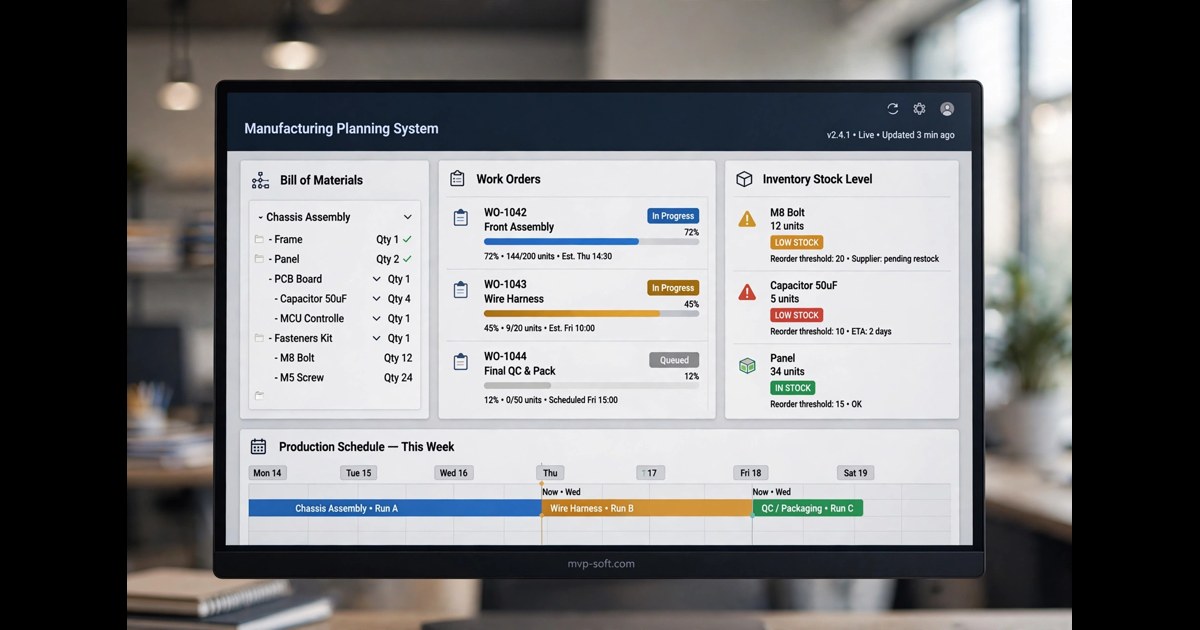
Part 6 of the SaaS or Build series, worked example 3 of 5. Prices checked October 2026. This is the example where I argue against myself the most, on purpose.
Manufacturing is where this series has to be careful. An ERP is not a board with tasks on it. It is the memory of everything a factory owns, owes and promised. So the small-manufacturer systems, Katana, MRPeasy, Fishbowl and their class, get the most honest sheet of the five.
The functionality specification
Inventory with real quantities by location. Multi-level bills of material. Work orders that consume materials and produce finished goods. Production scheduling a supervisor can actually follow. Purchasing tied to what production will need. Sales orders flowing in, including from Shopify or WooCommerce for the many small manufacturers who sell online. Shop floor tracking: who did what, on which order, for how long. And the QuickBooks or Xero connection, because the factory and the ledger must reconcile.
What the rent costs, in three shapes
This category charges in every model at once, which is itself instructive.
Katana now charges flat: Core from 299 dollars a month with unlimited users, which is a fair model and I will say so. But production depth is modular: the Manufacturing Management add-on is 199 a month, traceability another 249. The realistic stack, 500 to 750 dollars a month, is 30,000 to 45,000 over five years, plus usage-based elements as order volume grows.
MRPeasy is the classic per-seat shape: 49 dollars per user on Starter, 99 on Enterprise. Twenty-five users on Enterprise is 2,475 dollars a month, about 148,000 over five years. Same factory, same spec, four times the Katana bill. The pricing model, not the software, did that.
Fishbowl sells users in bundles: 229 dollars a month including two users, 429 including five, 729 including ten, with its Advanced Manufacturing line starting at 675 and AI as a paid add-on. Grow past the bundle and the conversation starts over.
What building the equivalent takes
Here is the honesty this series owes you: a full ERP replacement is the largest build on our list, ten to sixteen weeks for the core specification above, and the depth of a mature product, edge cases in costing, returns, partial shipments, is earned over years. Of the five examples, this is the one where the vendor's head start is worth the most.
So the smart build in manufacturing is usually not the ERP. It is the layer around it that the ERP does badly: the scheduling board your supervisors actually run, the customer-facing order status your buyers keep calling about, the report that takes your office manager a day a month to assemble by hand. Build the painful ten percent, rent the deep ninety, and revisit when the math from Part 2 says the per-seat column has outgrown the product's fit.
The read
Rent the system of record. Build the layer where your process differs and your people suffer. In manufacturing, that order matters more than anywhere else in this series.
Ten questions about how work actually moves through your operation. No call, no slide deck.
If you want a second opinion on a specific decision, that conversation is free.
More from The Bridge
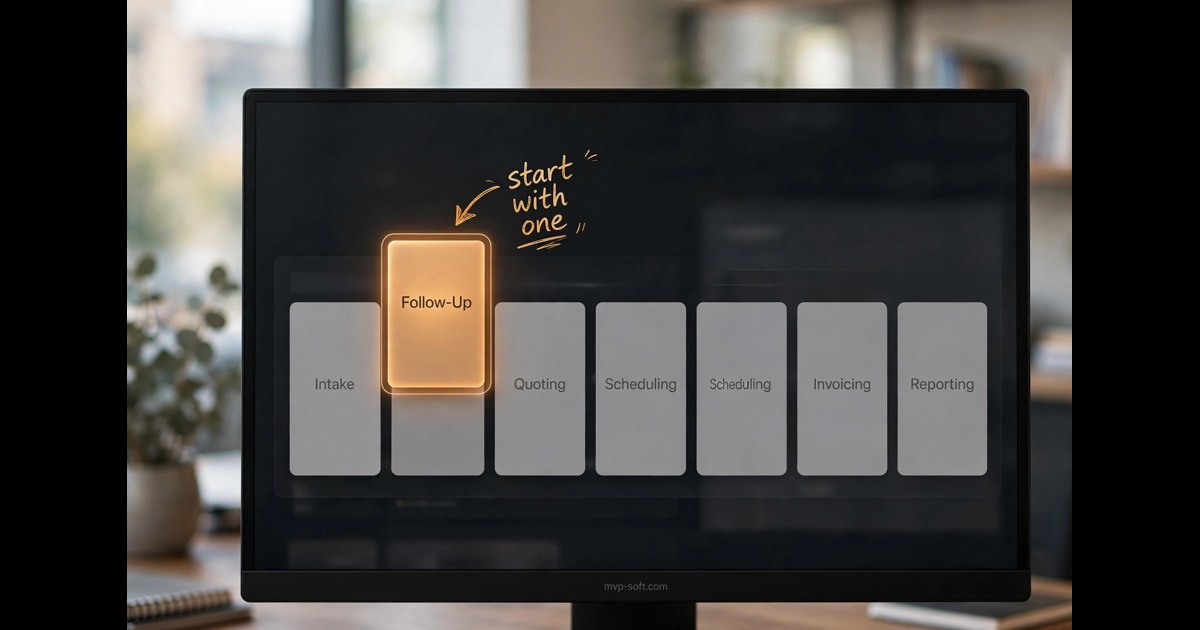
SB-12: Start With One Workflow
The finale: how to pick the one workflow worth building first, what starting honestly looks like, and what changes ninety days later. Examine the rent once a year; that is all this series asks.
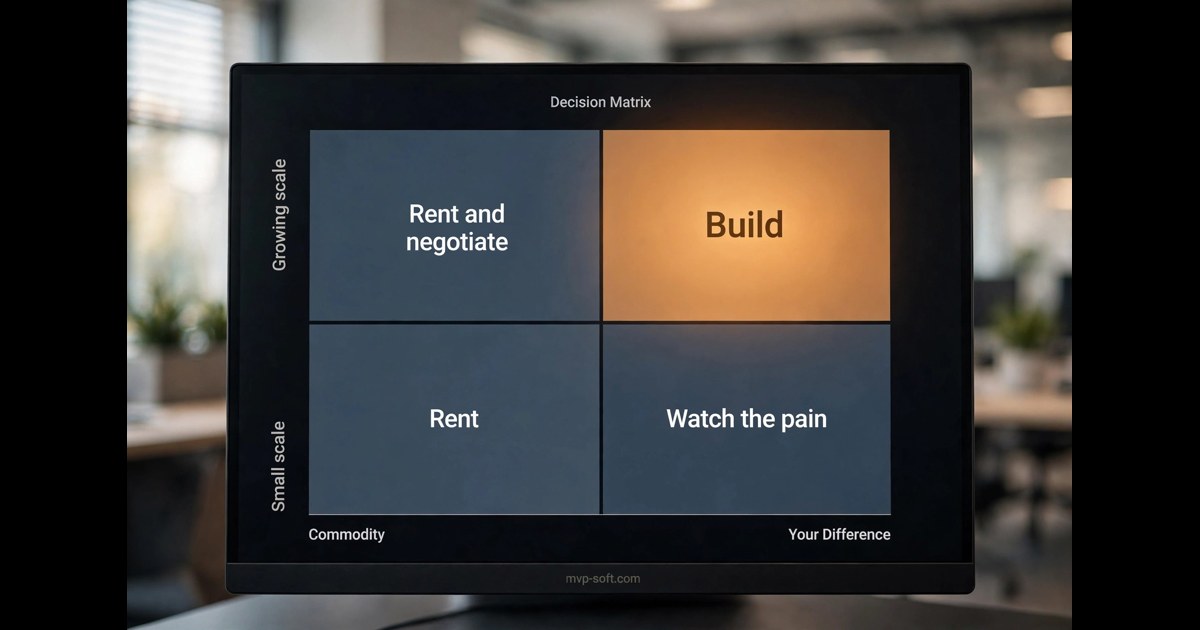
SB-10: The Crossover Point
A two-axis matrix for every tool in your stack, what AI did to the cost wall that separated building from renting, and the build side's honest costs, stated plainly.
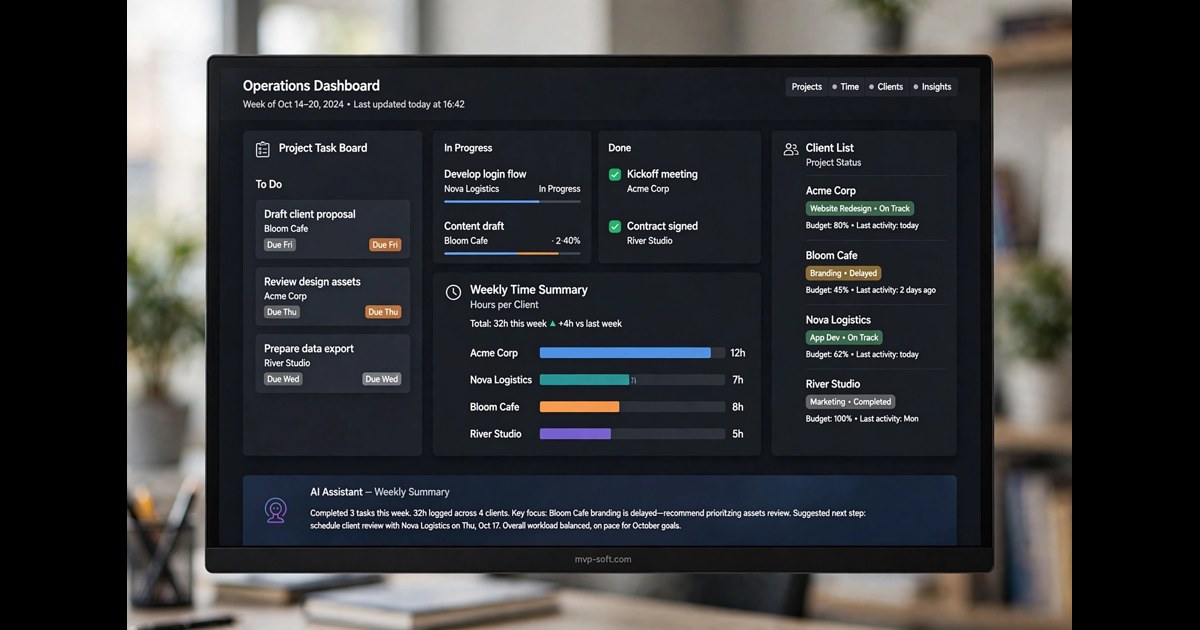
SB-11: I Used Jira and Toggl for Twenty Years. Then I Built My Own.
Two decades a loyal paying user of the tools this series prices, then one multi-tenant system of my own: no seat meter, no tiers, AI on all the data at once. The receipt for the whole argument, and a standing offer.