D&S-06: The Real Leak Is Your Team's Browser
Part 6 of the Data & Security series. In Part 5 we chose a home for the AI. Here we deal with the risk that ignores architecture completely: your own people, helping themselves.
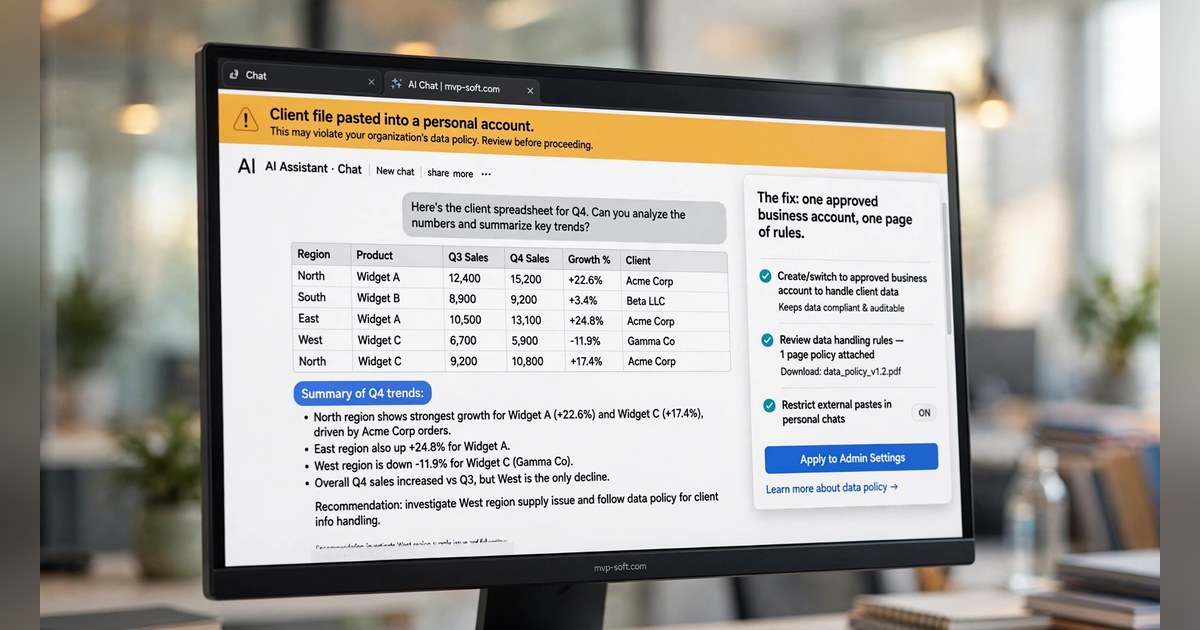
Picture a good employee. Not a careless one, a good one. It is 4:40 in the afternoon, a client is waiting, and there is a spreadsheet full of names, balances and notes that needs summarizing before 5. She opens the free AI tool she uses at home, pastes the file in, and gets a beautiful summary in twenty seconds.
No hacker. No break-in. Just a helpful person, a deadline, and a door nobody told her not to use. This is how most company data actually leaves through AI, and surveys of IT leaders keep finding the same thing: a large share of what employees paste into AI tools is company information, much of it sensitive, most of it invisible to the company until somebody asks.
Why banning it fails
The instinctive response is a ban, and bans have a perfect record: they have never once stopped the behavior. They stop the visibility. People keep using the tools, on personal accounts, on personal phones, and now you cannot see it, cannot set retention, cannot close accounts when someone leaves, and cannot answer a client who asks how their data was handled.
One of the world's largest electronics makers learned this in public in 2023, when engineers pasted internal source code into a chatbot to fix it faster. The company's first move was a near-ban and a warning. The lesson the rest of us should take is not that employees are reckless. It is that the tool was useful, the official path was missing, and usefulness always wins.
What works instead
Give them a door, not a wall. Put the team on a proper business account, the kind whose terms exclude training and give the company control, and make it the easiest AI they can reach. People use the approved tool when the approved tool is one click and the free one is a small act of rebellion.
Write the red list on one page. Not a forty-page policy. One page, in plain words: client names and identifiers never go in. Financial records never go in. Health and legal matter content follows the regulated rules. Public material and your own drafts are fine. If an employee cannot decide in ten seconds, the list is too complicated.
Run an amnesty. Ask the team, plainly, what they are already using AI for, with a promise that honesty costs nothing. You will learn more in that one meeting than any monitoring tool will tell you, and you will learn it while trust is still intact. Then migrate those uses to the approved accounts.
Name an owner. One person who adds and removes accounts, checks the settings twice a year, and reads the terms when they change. AI safety in a mid-size company is not a department. It is a name on a short list of jobs.
The sentence to say out loud
In the team meeting, it sounds like this: “These tools are useful, I use them too. Here is the company account, here is the one page of what never goes in, and if you are not sure, ask me before you paste, not after.” That is the whole culture change, and it costs an afternoon.
Your people are not the vulnerability. They are the reason the tools are worth having. Give their habits a safe shape and the leak mostly closes itself. Next in the series: the twelve questions that do the same job on the vendor side, for the meeting before you sign anything.
Ten questions about how work actually moves through your operation. No call, no slide deck.
If you want a second opinion on a specific decision, that conversation is free.
More from The Bridge
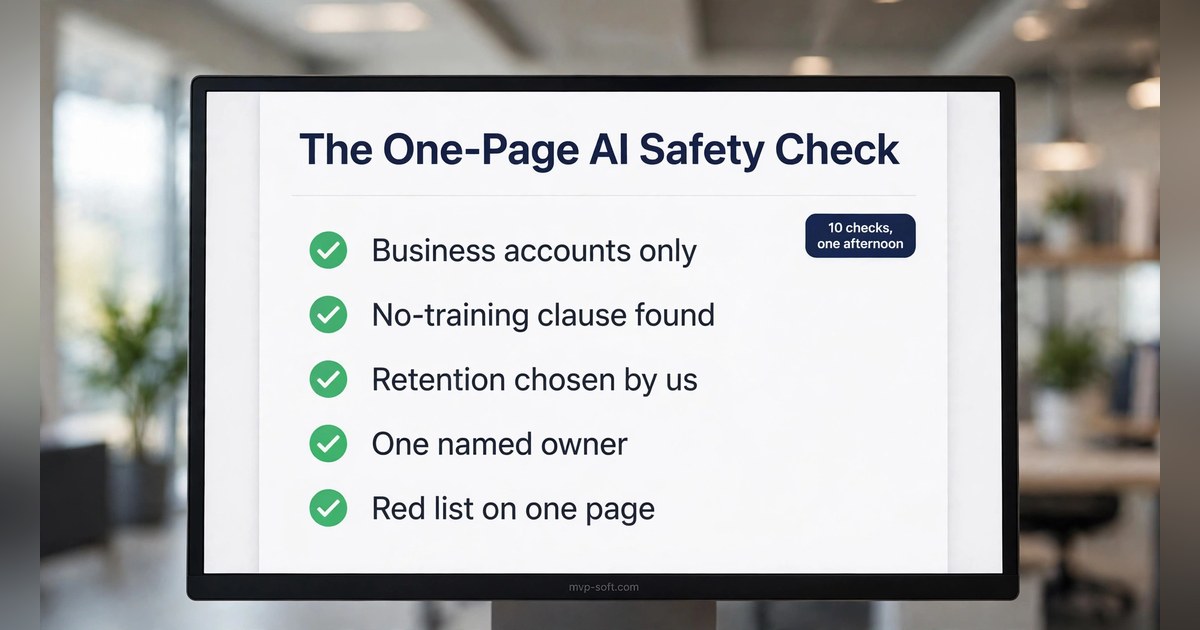
D&S-08: The One-Page AI Safety Check
The series in one page: ten checks any company can run in an afternoon to know where it stands with AI and data, and what to fix first.
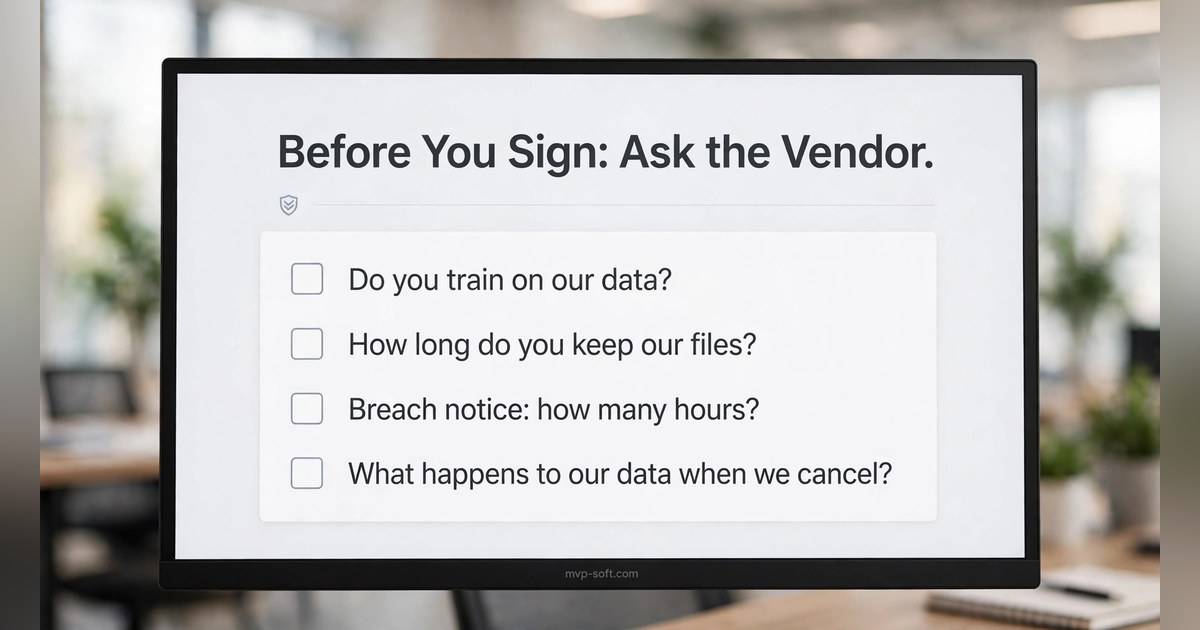
D&S-07: Twelve Questions to Ask Any AI Vendor Before You Sign
A checklist for the meeting before the contract: training, retention, subprocessors, residency, audit logs, breach notice, and what happens to your data when you leave.
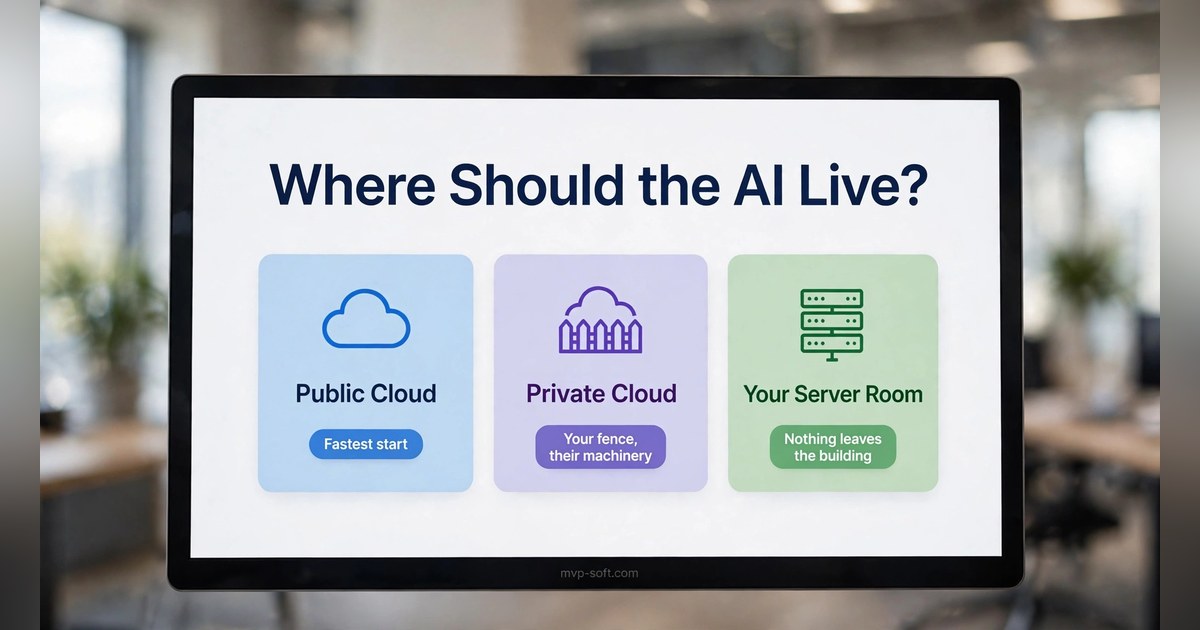
D&S-05: Cloud, Private Cloud, or Your Own Server?
Where the AI lives decides who holds your data, what it costs, and who maintains the machinery. Three honest options, with the tradeoffs nobody puts in the brochure.