SB-03: The Usual Suspects
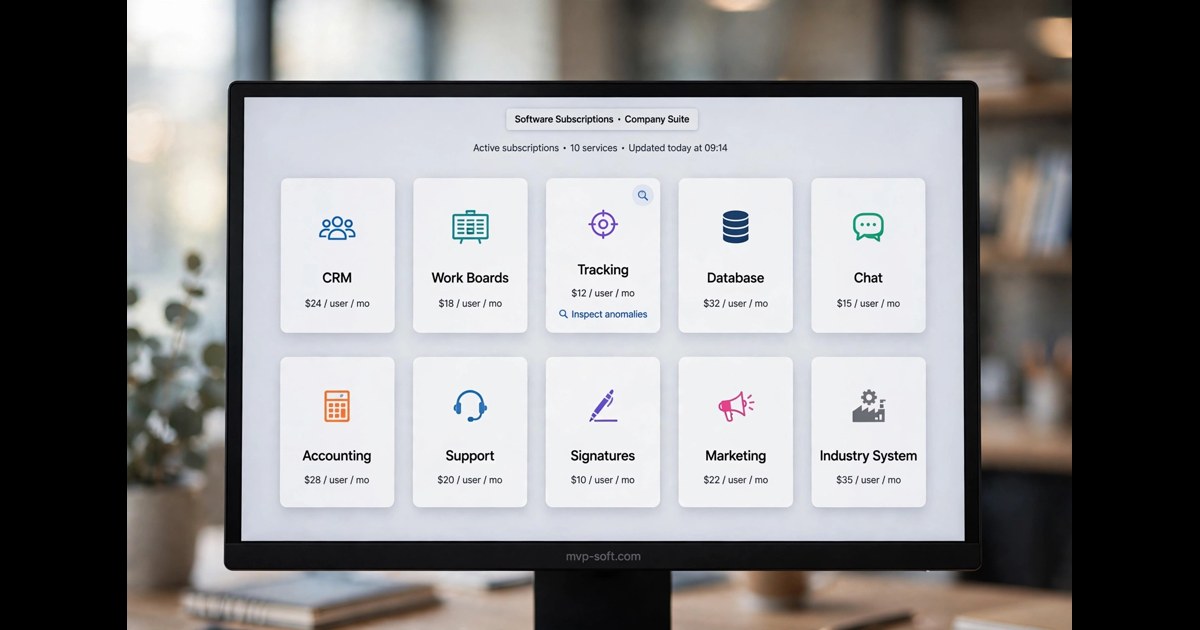
Part 3 of the SaaS or Build series. In Part 2 we did the growth math. Here is the map: the ten categories almost every growing business rents, what each one charges for, and which pricing model each uses. Prices checked October 2026.
Before the worked examples, the whole board. Ten categories cover nearly every subscription a mid-size company carries. Notice that they do not all charge the same way, and the model is where the traps live.
The ten usual suspects
1. The CRM. Salesforce, HubSpot. Per user per month, and the ladder is steep: Salesforce's suites run from 25 dollars per user at the starter end to 165 and well beyond at the top. The CRM is usually the largest single rent a sales-driven company pays.
2. Work management. Monday, Trello, Asana, ClickUp. Per seat: Trello runs 5 to 17.50 dollars, Monday 9 to 19, with seat minimums and seat blocks that make small teams pay for empty chairs. This gets a full worked example next.
3. Project and issue tracking. Jira and its class. Around 9 to 18 dollars per user, sold in user tiers on annual plans: a 30-person team can find itself paying for the 50-seat tier. I know this one personally; it closes the series.
4. The flexible database. Airtable above all. 20 to 45 dollars per editor, priced on who is allowed to change data, with record ceilings that force upgrades. Worked example later in the series.
5. Team communication. Slack, Teams. Per active user. Cheap per seat, universal in reach: often the hardest rent to question and, honestly, one of the more defensible ones.
6. Accounting. QuickBooks and its class. A base subscription plus per-user tiers. The ledger is a commodity wrapped in regulation; this series will argue for keeping the rent here.
7. The support desk. Zendesk and its class. Per agent per month. Fair model while your support team is small; the bill grows exactly with the team your customers talk to.
8. Documents and signatures. DocuSign and its class. Per user, sometimes per envelope. Small numbers that quietly become five figures in a contract-heavy business.
9. Marketing email. Mailchimp and its class. Priced by contacts, which means the meter runs on your audience, not your team. Your success is the billing unit. Remember this shape when we reach the customer portal.
10. The industry system. Every trade has one: MarketSharp for remodelers, Katana and Fishbowl for small manufacturers, and their cousins in law, logistics, clinics and field service. Priced per plan, per bundled user, per module; the least comparable and the least questioned, because “it is made for us.” Three of the five worked examples in this series come from this category, because that is where the interesting money is.
How to read the rest of the series
Each example that follows uses the same five-part sheet: what the tool does (the functionality specification), what it costs at 25, 50 and 75 users over five years, what building the equivalent honestly takes, what you gain, and what you lose. Same sheet, five different tools, so the comparisons stay honest and you can run the sixth one, your own biggest subscription, yourself.
Ten questions about how work actually moves through your operation. No call, no slide deck.
If you want a second opinion on a specific decision, that conversation is free.
More from The Bridge
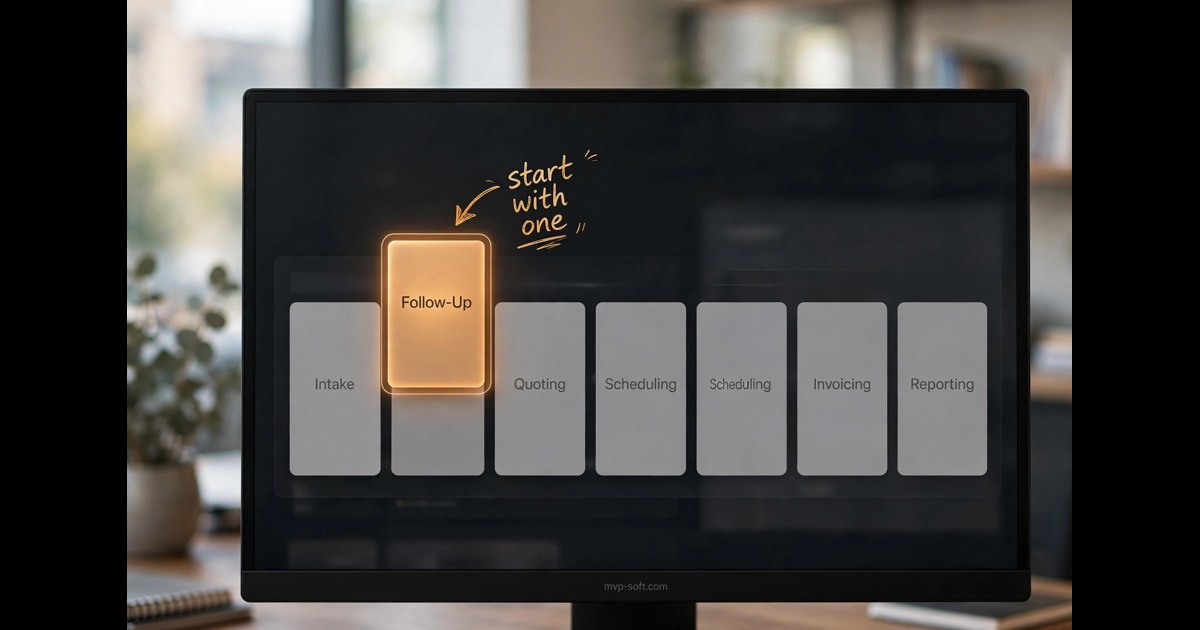
SB-12: Start With One Workflow
The finale: how to pick the one workflow worth building first, what starting honestly looks like, and what changes ninety days later. Examine the rent once a year; that is all this series asks.
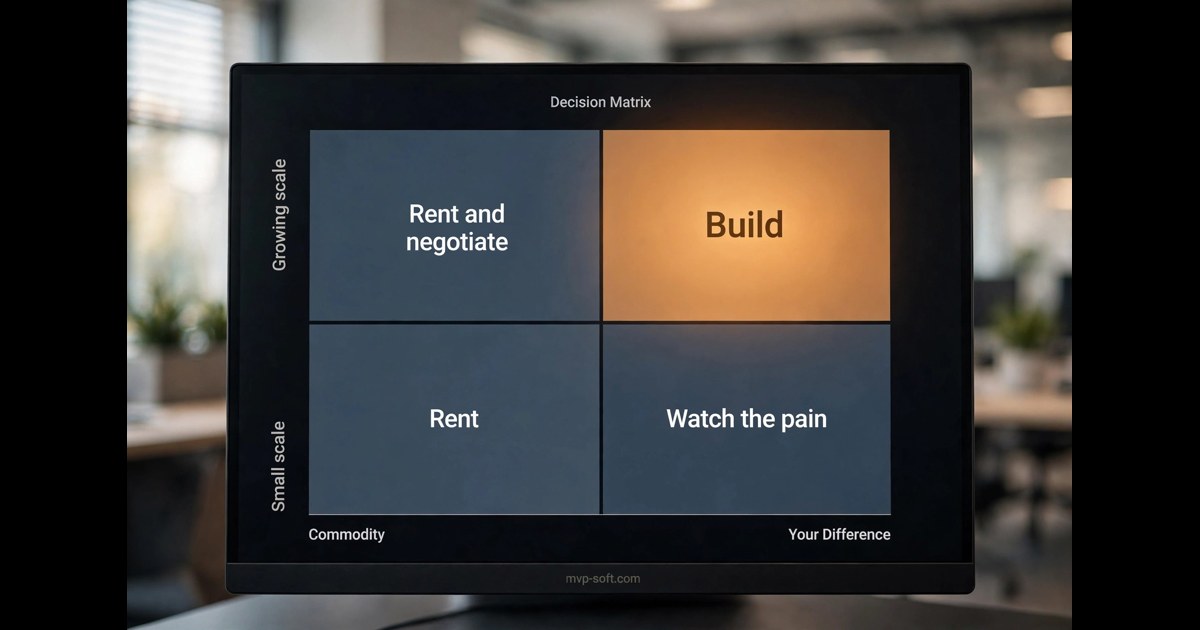
SB-10: The Crossover Point
A two-axis matrix for every tool in your stack, what AI did to the cost wall that separated building from renting, and the build side's honest costs, stated plainly.
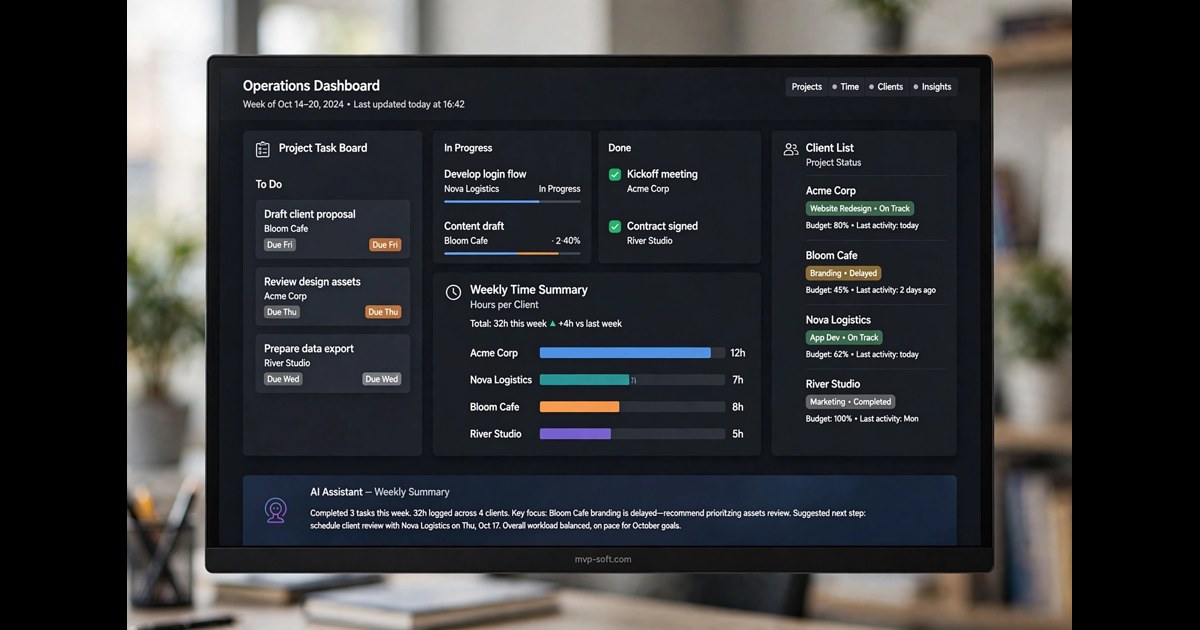
SB-11: I Used Jira and Toggl for Twenty Years. Then I Built My Own.
Two decades a loyal paying user of the tools this series prices, then one multi-tenant system of my own: no seat meter, no tiers, AI on all the data at once. The receipt for the whole argument, and a standing offer.