SB-01: The Rent You Never Question
Part 1 of the SaaS or Build series. No vendor bashing in this series, just arithmetic: what renting software really costs a growing company, what building your own costs now, and where the two lines cross.
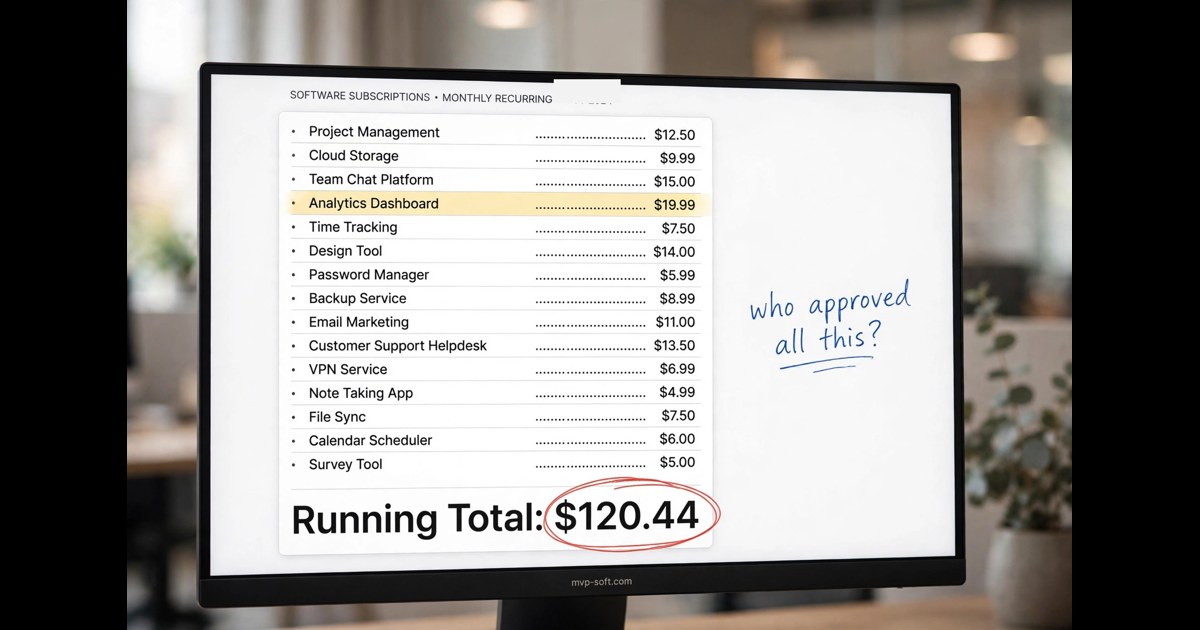
Do a small experiment. Ask whoever pays your bills to list every software charge that hit the company last month. Not the big ones you remember. All of them.
Most owners of 50-person companies guess six or seven. The real list usually runs ten to fourteen: the CRM, the project boards, the time tracker, the chat tool, the accounting package, the signature tool, the support desk, the email marketing tool, the industry system nobody else uses, and two or three things one employee signed up for in 2023 that renew quietly every year.
Nobody ever decided to spend what that list totals. That is the subject of this series.
How the rent assembles itself
Each subscription arrived the same way: a real problem, a free trial, a credit card, relief. Ten dollars here, twenty there, always per person, always small enough to approve without a meeting. Individually, every one was a good decision. I have made most of them myself.
The total was never a decision at all. It assembled itself, one sensible click at a time, and it renews itself the same way. Rent always does. That is what rent is for.
Three habits keep it invisible. The charges are spread across cards and departments, so no single report shows the stack. The price is quoted per user per month, the smallest possible unit, so a tool for the whole company sounds cheaper than Friday's team lunch. And the seats drift: people leave, contractors finish, projects end, and the seats stay, because removing them is nobody's job. Ask your own managers how many of their tool's seats logged in last month. The pause before the answer is the audit.
What this series will do
We are going to price the rent honestly, and then price the alternative honestly, because both sides of this argument are usually argued with feelings.
First, the math of per-seat pricing as a company grows from 25 to 75 people, which is where renting quietly becomes a salary-sized expense. Then a map of the usual suspects, the categories almost every business rents. Then five worked examples with real prices and real functionality lists: work management (Monday, Trello), a contractor CRM (MarketSharp), a small manufacturing ERP, Airtable as the small-business system for everything, and the customer portal, which is the purest form of the trap.
After the examples, the honest counterweight: the cases where renting wins outright, and I will tell you to keep renting. Then the crossover matrix, my own story of renting task and time tools for twenty years before building my own, and a calm way to start.
One promise about method: every price in this series was checked against the vendor's published pricing in October 2026, and prices are named with their date, because vendors change them the way airlines change baggage rules. The model matters more than the digit. And the model, per person per month, forever, is the thing worth questioning.
Ten questions about how work actually moves through your operation. No call, no slide deck.
If you want a second opinion on a specific decision, that conversation is free.
More from The Bridge
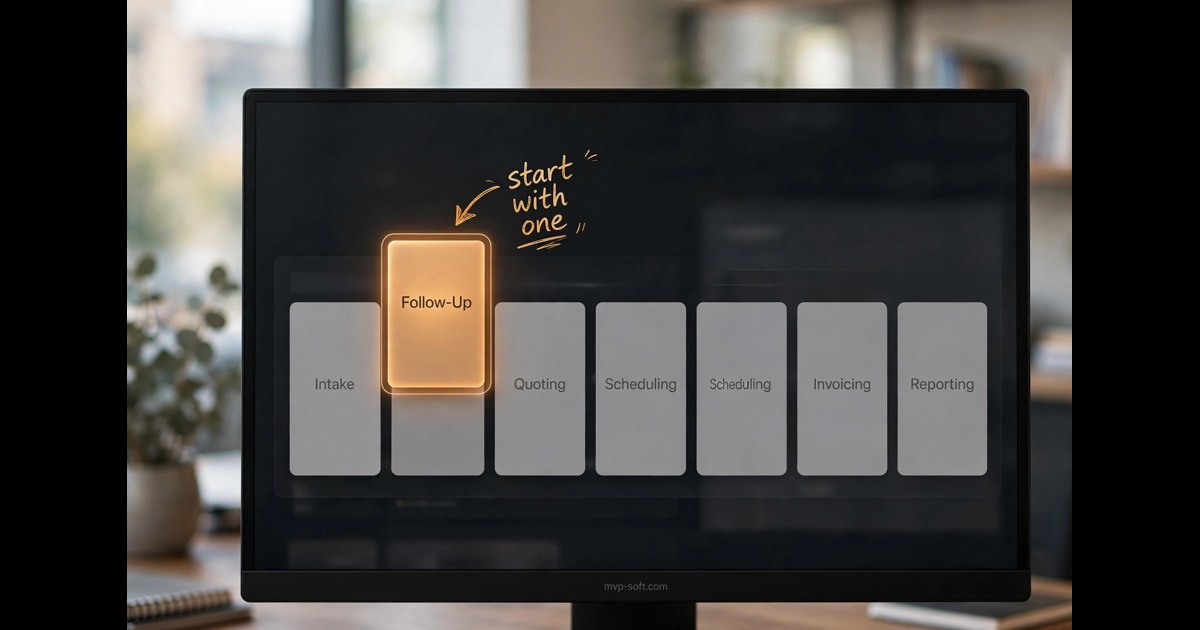
SB-12: Start With One Workflow
The finale: how to pick the one workflow worth building first, what starting honestly looks like, and what changes ninety days later. Examine the rent once a year; that is all this series asks.
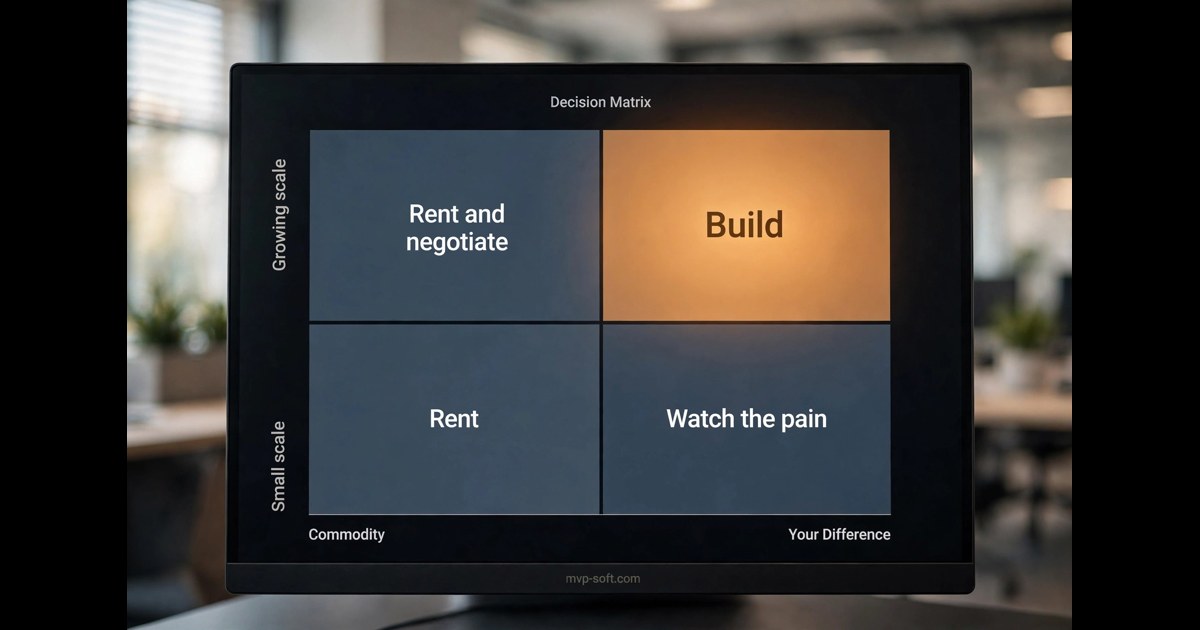
SB-10: The Crossover Point
A two-axis matrix for every tool in your stack, what AI did to the cost wall that separated building from renting, and the build side's honest costs, stated plainly.
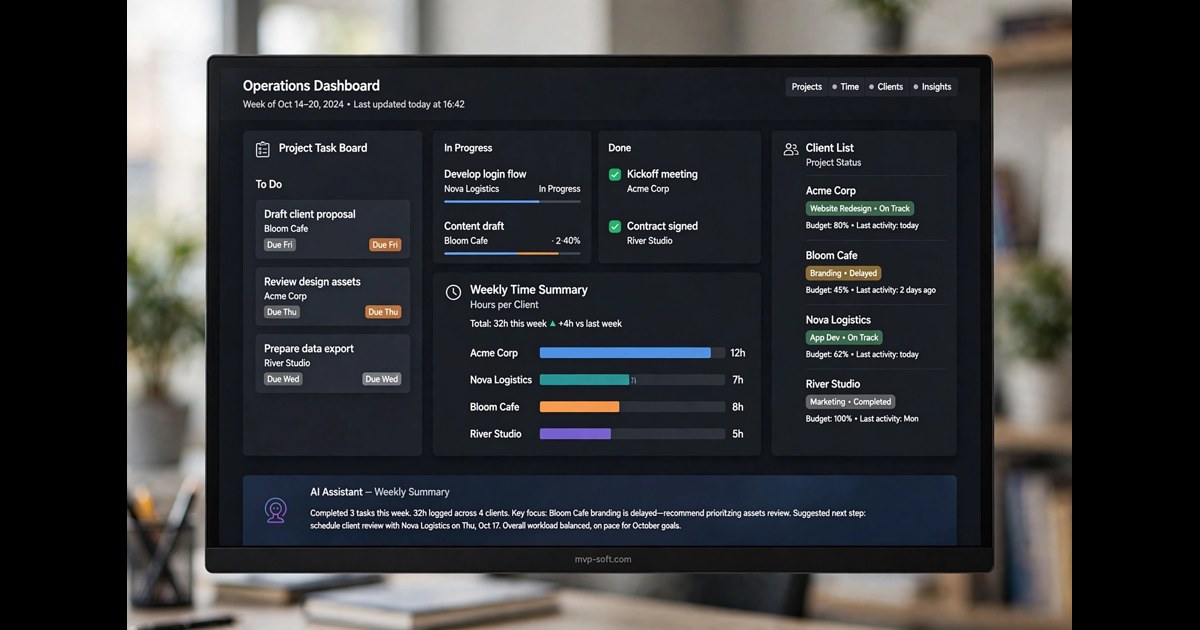
SB-11: I Used Jira and Toggl for Twenty Years. Then I Built My Own.
Two decades a loyal paying user of the tools this series prices, then one multi-tenant system of my own: no seat meter, no tiers, AI on all the data at once. The receipt for the whole argument, and a standing offer.