SB-09: When SaaS Wins
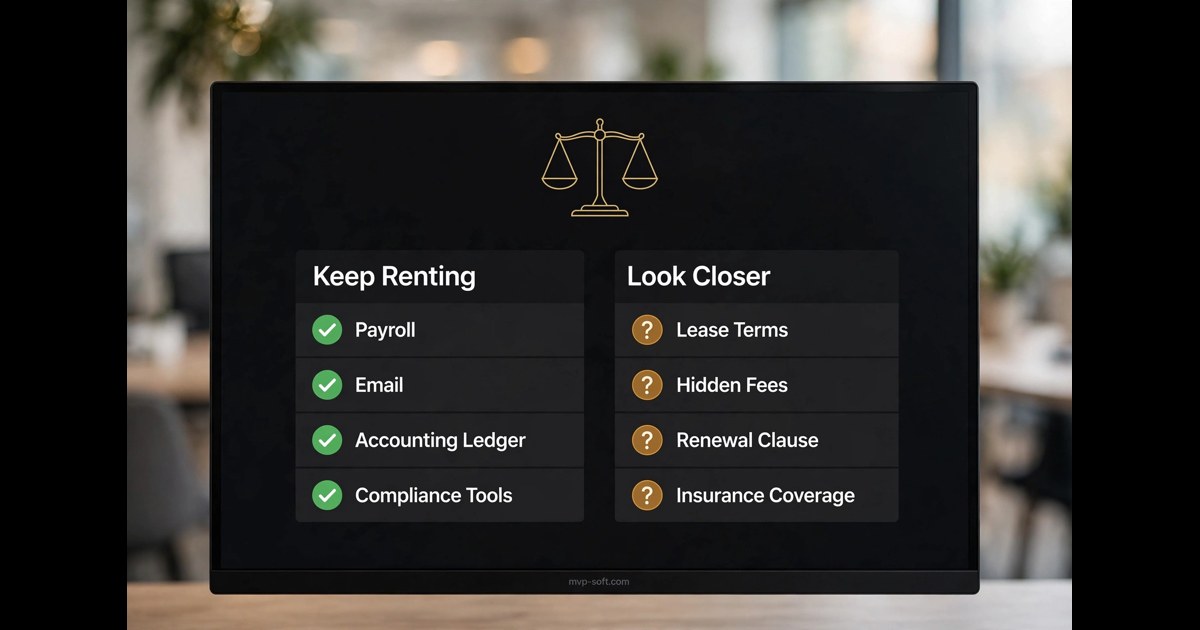
Part 9 of the SaaS or Build series. After five worked examples it is time for the article that keeps this series honest: the cases where renting wins, plainly stated, by the man arguing for building.
If this series only cheered for building, you should trust it less. I run a company that builds software, so apply a discount to everything I write, and then notice that the next few hundred words argue for sending money to my competitors. That is deliberate. The build-versus-rent question has a wrong answer in both directions.
Keep renting the commodity
Some software is a commodity wrapped in law. Payroll and tax calculation change with legislation in fifty states; a vendor with thousands of customers amortizes that vigilance, and an error costs them more than it costs you. Email and calendar are utilities with deliverability and security problems you do not want to own. The accounting ledger sits under audit and regulation. For these, the per-seat price buys you an insurance policy and a research department. Rent them, gladly, and revisit once a year out of politeness.
The test is simple: if the process works the same in every company in your industry, because the law or the market standardized it, it is a commodity. Nobody ever won a customer because their payroll was bespoke.
Keep renting the ecosystem
Some tools are not products but places. A marketplace of integrations, an app store, a pool of freelancers who already know the tool, hires who arrive pre-trained. When you leave a platform you leave all of that, and a build has to replace only the software but you feel the loss of the place. If your company genuinely uses the ecosystem, integrations counted in dozens, not the usual three, the rent is buying something real.
Keep renting when you are small and stable
The math of this series turns on growth. At ten people with low churn in headcount, per-seat bills stay small for a long time, the vendor's polish outweighs your process's uniqueness, and your scarcest resource is attention, not license money. Rent, revisit at 25 users, and let the columns in Part 2 tell you when the conversation changes.
Keep renting speed
A tool you can switch on this week beats a better tool that arrives in two months, when the problem is bleeding now. Renting is also the correct way to prototype: six months on a rented tool teaches you your real specification, which is why so many good builds start as “we outgrew the thing we rent.” That is not a failure. That is tuition, and it is cheap at the price.
The rule the whole series reduces to
Buy the commodity. Rent the ecosystem while it earns. Build the difference: the process your customers can feel, the one your competitors cannot copy by buying the same subscription. The next part turns that rule into a matrix you can run on your own stack in an afternoon.
Ten questions about how work actually moves through your operation. No call, no slide deck.
If you want a second opinion on a specific decision, that conversation is free.
More from The Bridge
SB-12: Start With One Workflow
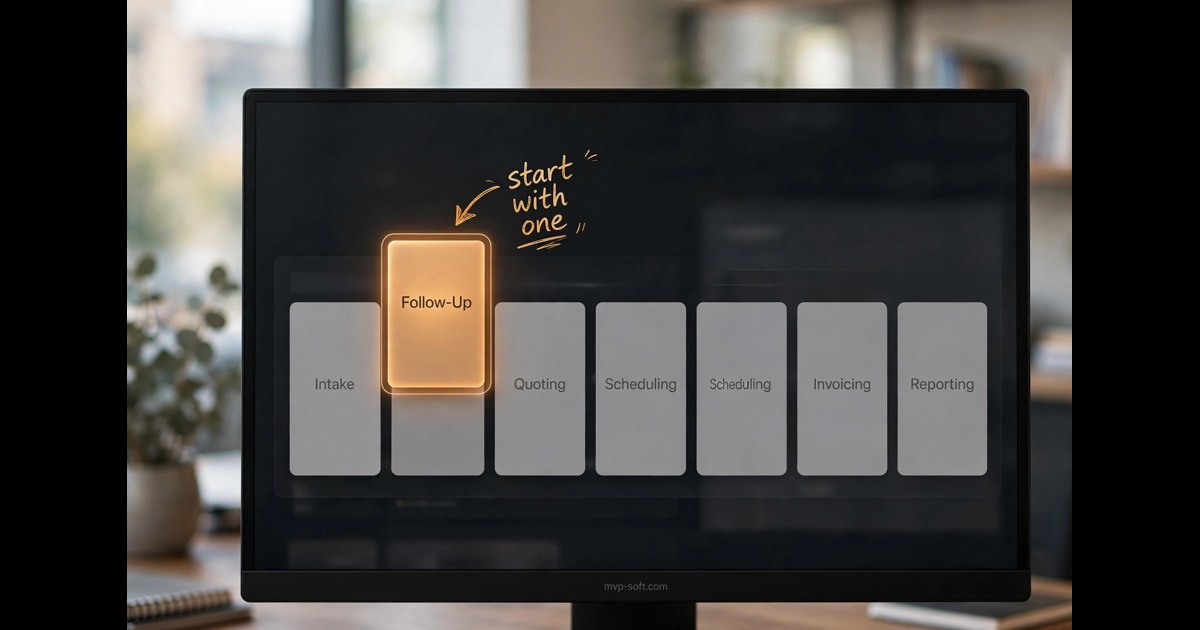
The finale: how to pick the one workflow worth building first, what starting honestly looks like, and what changes ninety days later. Examine the rent once a year; that is all this series asks.
SB-10: The Crossover Point
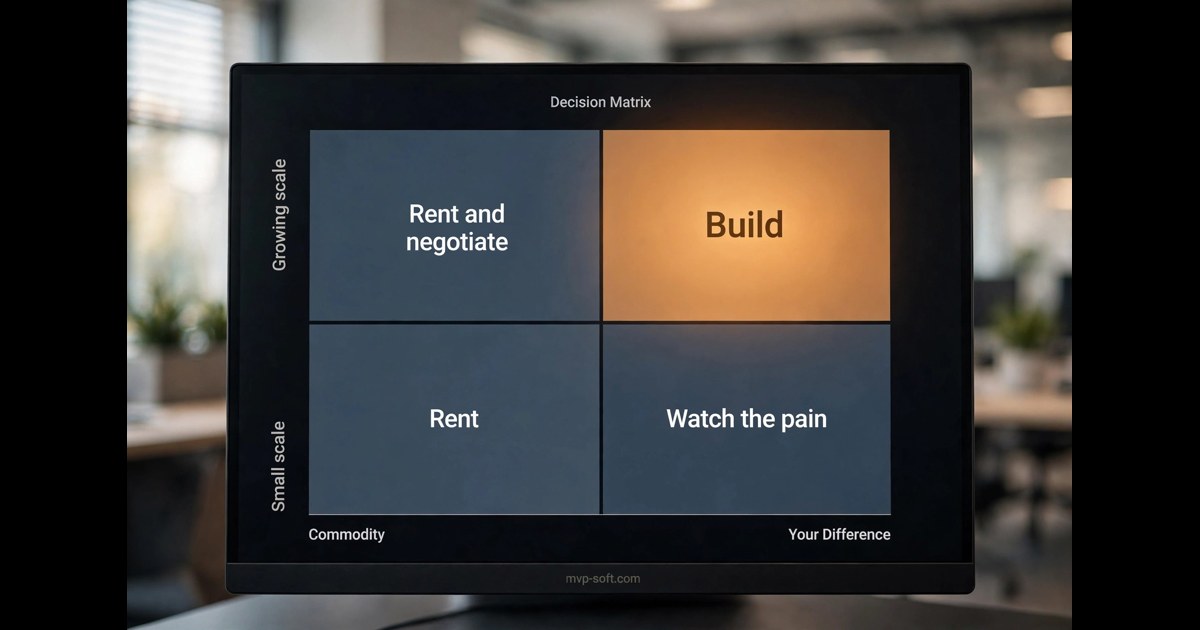
A two-axis matrix for every tool in your stack, what AI did to the cost wall that separated building from renting, and the build side's honest costs, stated plainly.
SB-11: I Used Jira and Toggl for Twenty Years. Then I Built My Own.
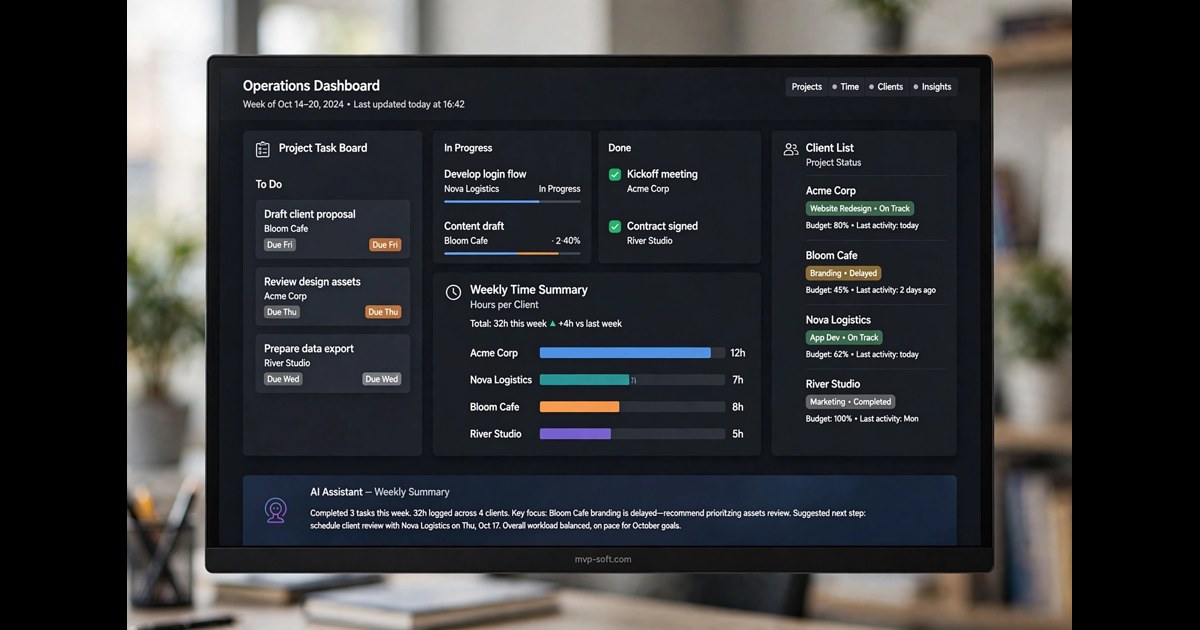
Two decades a loyal paying user of the tools this series prices, then one multi-tenant system of my own: no seat meter, no tiers, AI on all the data at once. The receipt for the whole argument, and a standing offer.