D&S-01: Where Does Your Data Go When You Use AI?
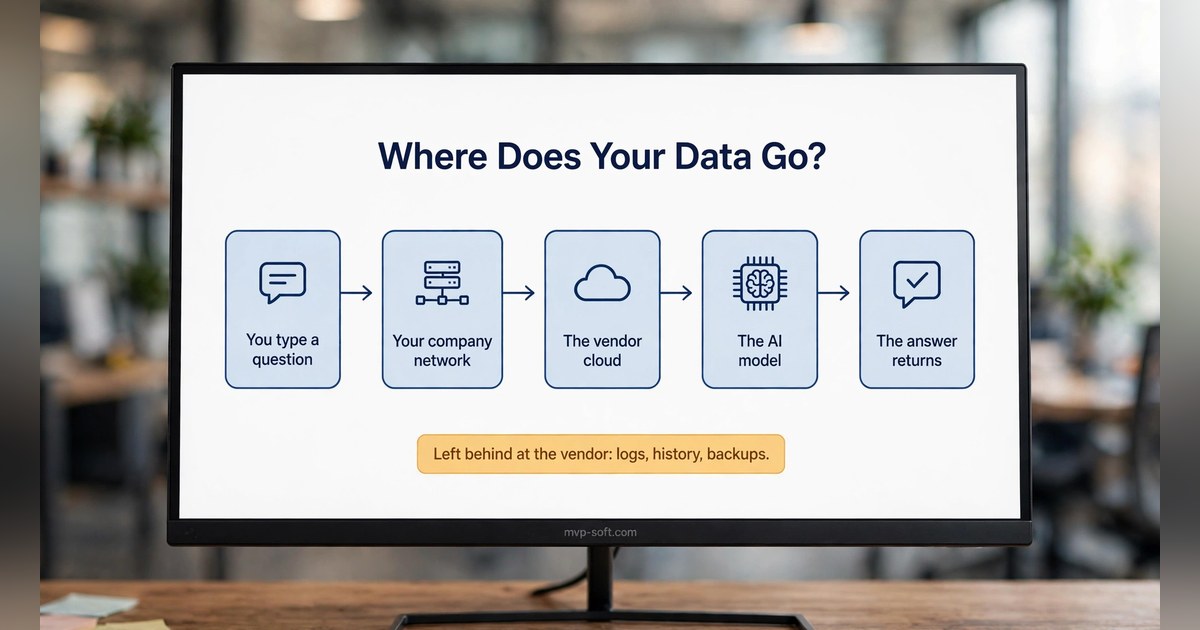
Part 1 of the Data & Security series. No scare stories in this series, just a clear look at where your data goes when you use AI, what your license really says, and what to check before you trust a tool with company information.
You open a chat window, paste in a paragraph from a client contract, and ask the AI to summarize it. The answer comes back in seconds. Here is the question almost nobody asks: where did that paragraph just go?
Not in a scary way. In a literal way. Because until you can answer it, every other AI safety question is guesswork.
Stop one: your own machine
The journey starts on your laptop or phone. The moment you press enter, what you typed leaves the building. It does not matter that the chat window feels private, like a document on your desk. It is not a document on your desk. It is a message sent to somebody else's computer.
This is the first thing worth understanding, because most AI confusion comes from treating a cloud service like local software. The spreadsheet on your machine is yours. The chat window is a counter at a very fast, very polite service window.
Stop two: the connection and the account
Your text travels over the internet to the vendor's systems, tied to whatever account you are signed in with. This detail matters more than people think. A personal account and a business account at the same vendor can look identical on screen and be governed by completely different rules behind the counter.
Same window. Different contract. We will spend a whole article on that difference later in this series, because it decides almost everything.
Stop three: the vendor's cloud
Your words land on the vendor's servers, in a data center that may be in your state or on another continent. There, the text is processed so the model can answer. Around that simple job sits a small crowd of other systems: abuse monitoring that scans for harmful content, logs that record what happened, backups that copy data so it can be restored, and support tools that engineers use when something breaks.
Each of those systems has its own rules. How long are chats kept? Consumer services often keep them until you delete them, and deleted items can linger in backups for a while. Business services usually let the company set retention and offer real deletion. Who can read your text? On consumer tiers, a flagged conversation can be reviewed by a human on the safety team. On business tiers, access is far more restricted and audited.
None of this is secret. It is all written in the vendor's data terms. It is just written in a dialect most owners never have time to read.
Stop four: the answer comes back, the data stays
The reply returns to your screen in seconds, and that feels like the end of the story. It is not. The answer came home. The question stayed behind, in logs, in history, in whatever retention the account carries.
That is the whole map: device, connection, vendor cloud, answer back, data stays. Four stops, and at every stop there is exactly one question that matters. Under what terms?
The calm conclusion
Please notice what this article did not say. It did not say AI is unsafe. It did not say never paste anything. Your email already lives on somebody else's servers, and so does your accounting file if you use a cloud bookkeeper. Business runs on other people's computers. It has for years.
The difference with AI is that the terms decide more than the technology. The same tool, on two different accounts, can mean “this may be used to improve the model” or “this is contractually excluded from training and deleted on your schedule.” Both answers are fine, for different kinds of information. What is not fine is not knowing which one you agreed to.
So the habit to build is small: before a tool touches company data, ask where the data goes and under what terms. The next article takes the most common version of that question. Does paying for the higher tier actually make your data safer?
Ten questions about how work actually moves through your operation. No call, no slide deck.
If you want a second opinion on a specific decision, that conversation is free.
More from The Bridge
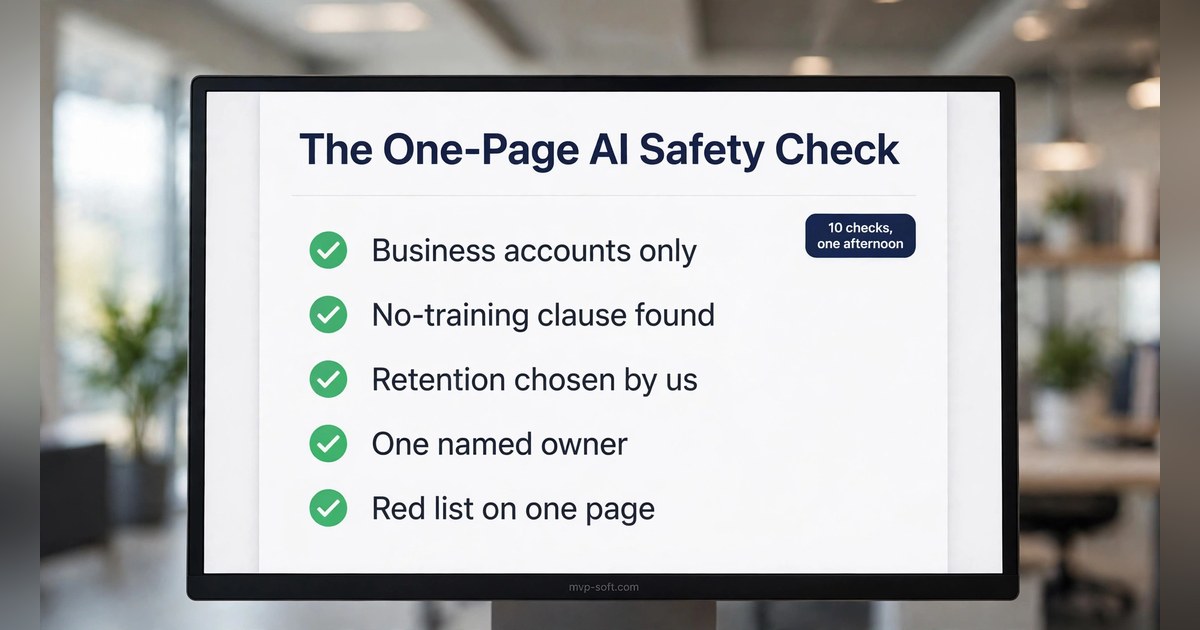
D&S-08: The One-Page AI Safety Check
The series in one page: ten checks any company can run in an afternoon to know where it stands with AI and data, and what to fix first.
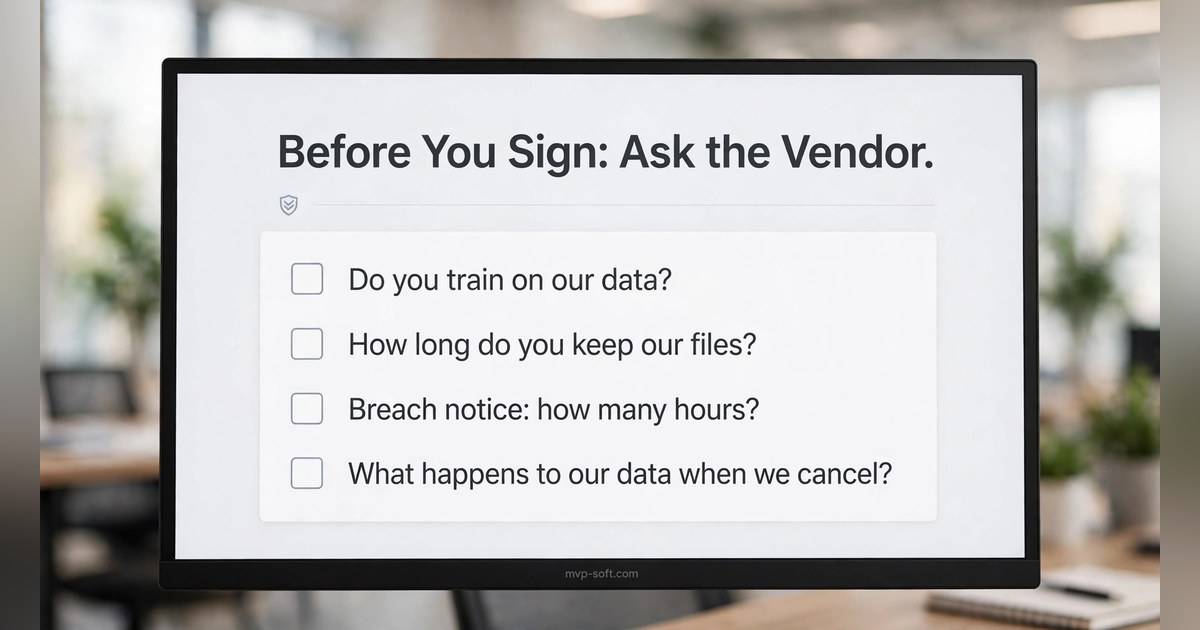
D&S-07: Twelve Questions to Ask Any AI Vendor Before You Sign
A checklist for the meeting before the contract: training, retention, subprocessors, residency, audit logs, breach notice, and what happens to your data when you leave.
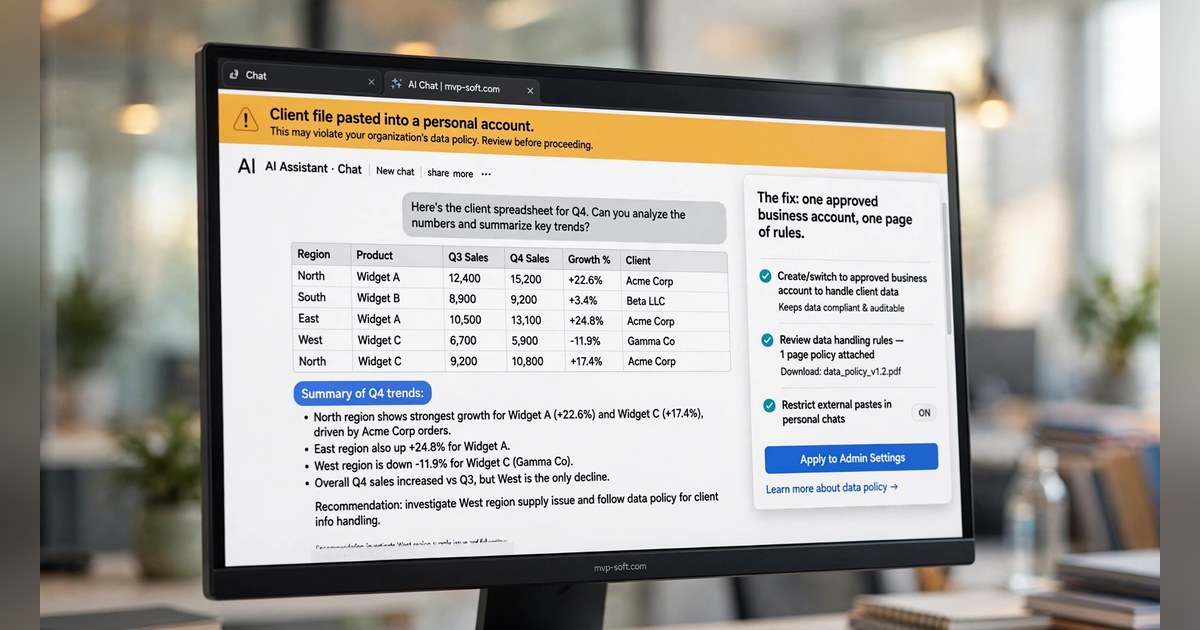
D&S-06: The Real Leak Is Your Team's Browser
The biggest AI data risk in most companies is not a hacker. It is a good employee, in a hurry, pasting client text into a free tool. How to fix the habit without banning the help.