SB-04: Example 1 of 5: Work Management (Monday, Trello)
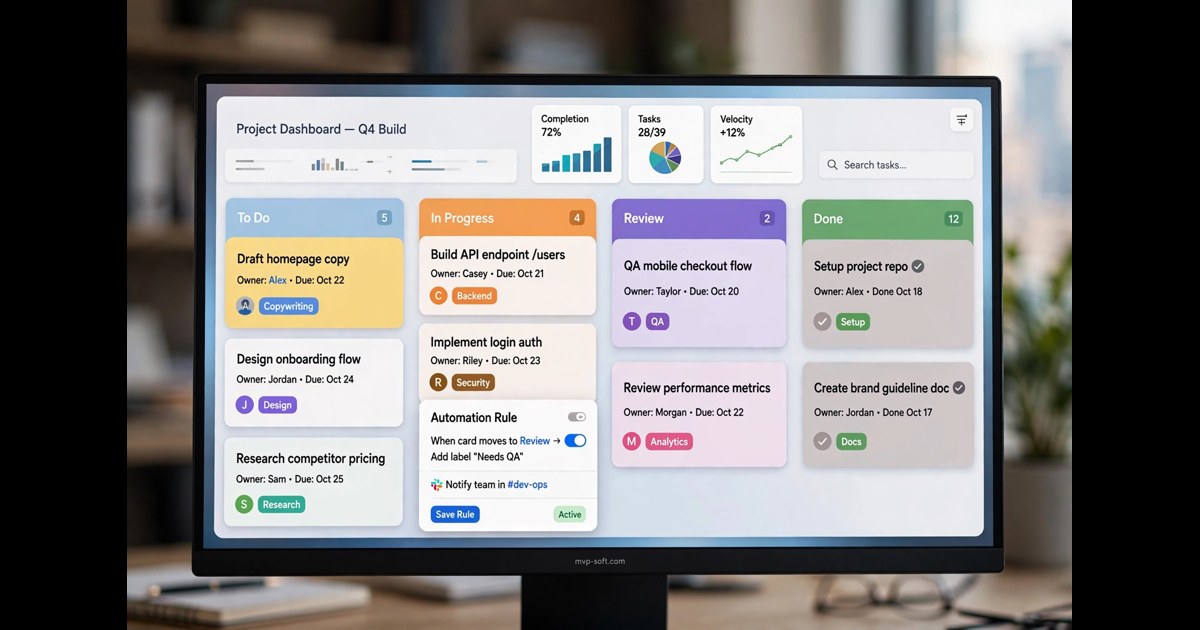
Part 4 of the SaaS or Build series, worked example 1 of 5. The map is in Part 3. Prices checked October 2026, annual billing.
Every growing company has a board somewhere with the work on it. Monday and Trello are the two names on most of those boards, so they open the examples. Both are good tools. The question is only what the board costs as the company grows.
The functionality specification
What a company actually uses, whichever logo is on it: boards or projects with stages; tasks with owners, due dates and comments; file attachments; timeline or calendar views for planning; automations (when this happens, do that); integrations with email and chat; a dashboard that rolls boards up for management; guest access for clients and contractors; and, on the tier most growing companies land on, time tracking and private boards.
What the rent costs
Monday's tiers: Basic 9 dollars per seat per month, Standard 12, Pro 19. Basic has no automations, which makes Standard the real entry and Pro the realistic home for a growing firm: 25,000 automation actions, time tracking, private boards. Monday also sells seats with a 3-seat minimum and in blocks above that, so odd-sized teams pay for empty seats.
Monday Pro at growth sizes:
25 users: $475 a month, $28,500 over five years. 50 users: $950 a month, $57,000 over five years. 75 users: $1,425 a month, $85,500 over five years.
Trello is the cheaper end of the same shelf: Standard 5 dollars per user, Premium 10, Enterprise 17.50 with a 50-seat minimum. Premium at 75 users is 750 dollars a month, 45,000 over five years. Lighter tool, lighter bill, same shape.
What building the equivalent takes
The specification above is a bounded piece of software: boards, tasks, comments, mentions, reminders, a rule engine for simple automations, roll-up dashboards. In our experience this is four to six weeks of work for a small senior team. What you get: your stages, your vocabulary, your approval steps exactly as your company runs them, unlimited seats, and AI where it earns its place, summaries of long threads and weekly roll-ups written for you, included rather than metered. What you honestly lose: the polished mobile apps, the template gallery, and hundreds of ready integrations. For an internal board, most companies use three integrations, not hundreds.
The read
At 25 people on Standard, renting is rational and I would rent. The crossover arrives with growth and the Pro tier: once the five-year rent passes the cost of a focused build, which for this category happens somewhere between the 50 and 75 seat columns, you are paying custom money for generic software. The board is also the safest first build in this whole series, because the process it carries is yours and the risk is low. Remember that when we reach the finale.
Ten questions about how work actually moves through your operation. No call, no slide deck.
If you want a second opinion on a specific decision, that conversation is free.
More from The Bridge
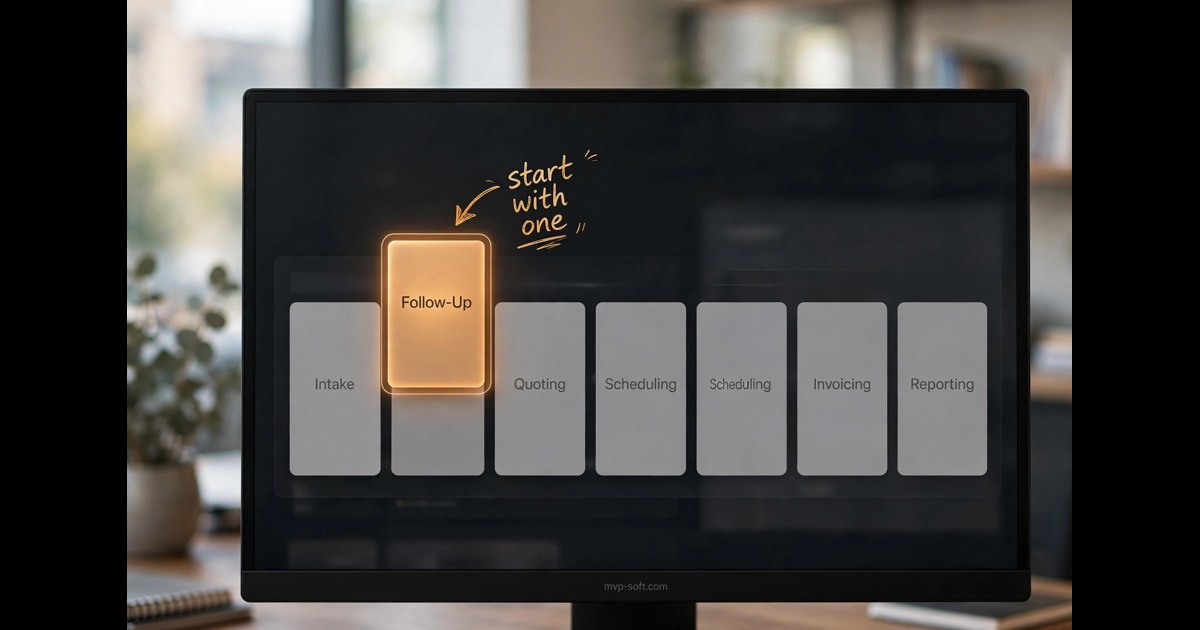
SB-12: Start With One Workflow
The finale: how to pick the one workflow worth building first, what starting honestly looks like, and what changes ninety days later. Examine the rent once a year; that is all this series asks.
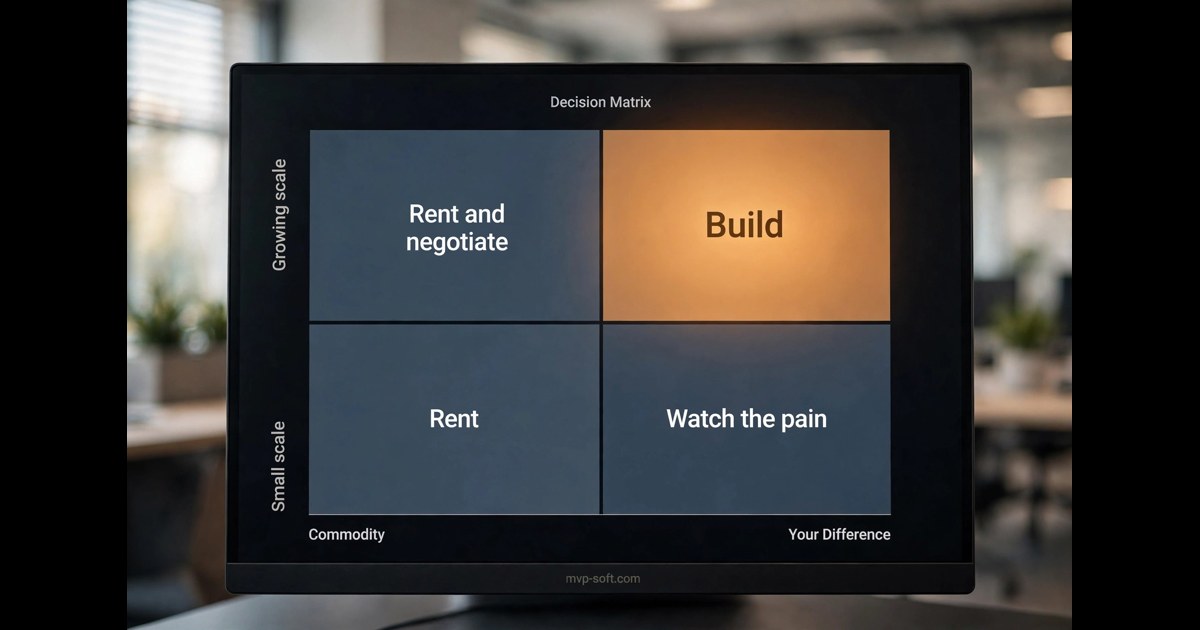
SB-10: The Crossover Point
A two-axis matrix for every tool in your stack, what AI did to the cost wall that separated building from renting, and the build side's honest costs, stated plainly.
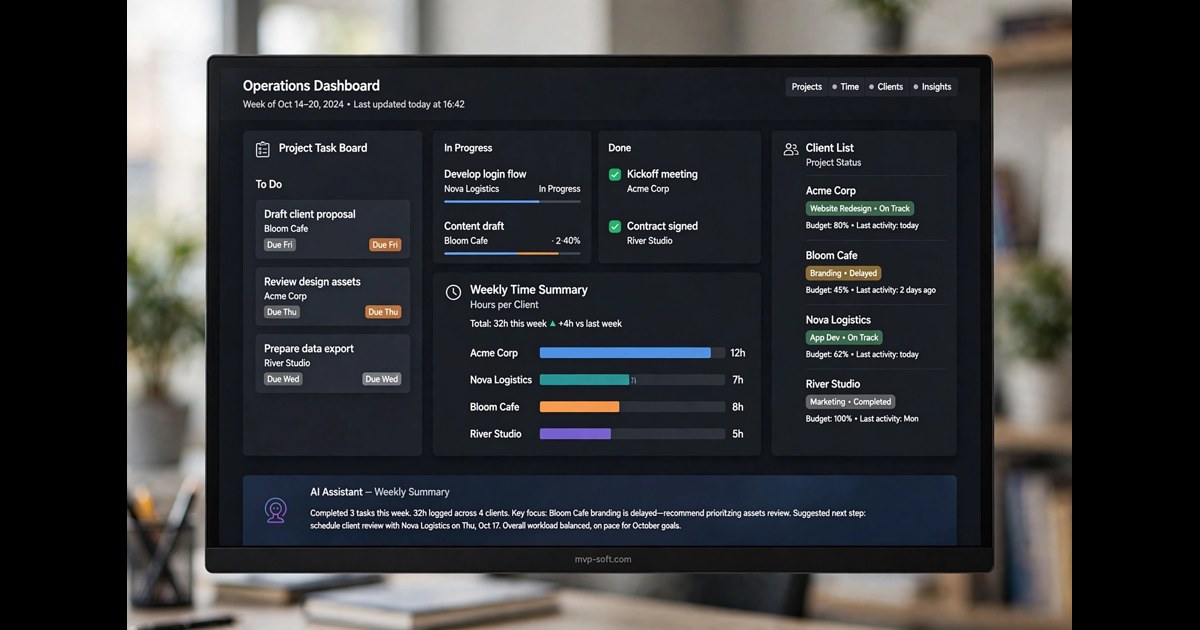
SB-11: I Used Jira and Toggl for Twenty Years. Then I Built My Own.
Two decades a loyal paying user of the tools this series prices, then one multi-tenant system of my own: no seat meter, no tiers, AI on all the data at once. The receipt for the whole argument, and a standing offer.