- SB-01: The Rent You Never Question
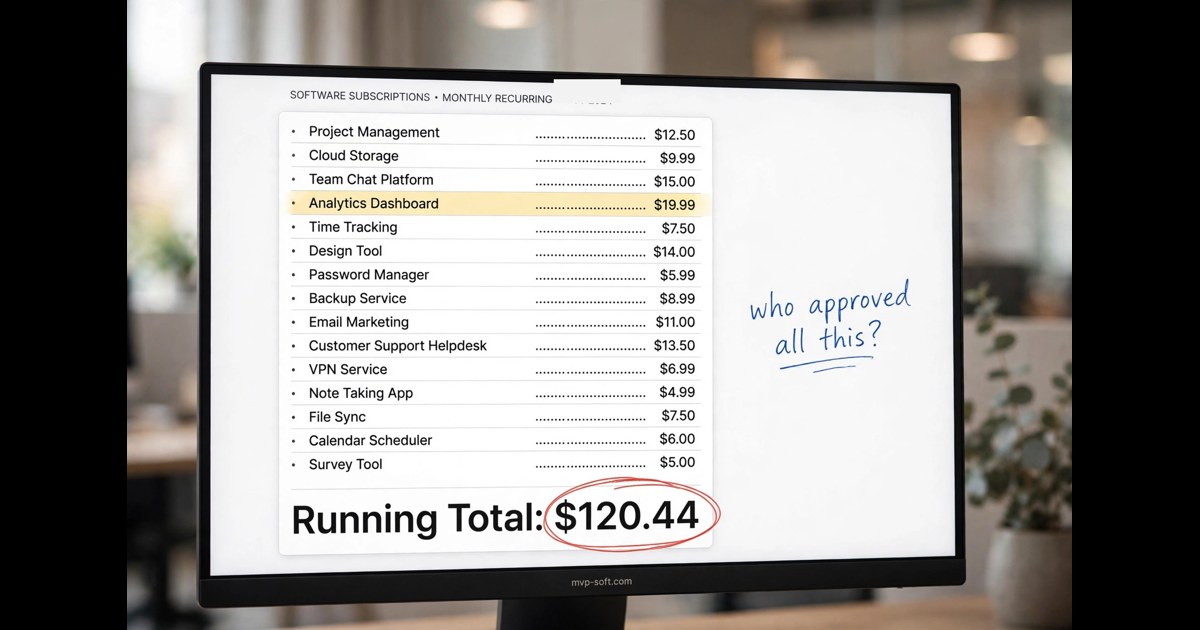
Ask for the full list of software charges from last month and you will find ten to fourteen subscriptions nobody ever consciously approved as a total. How the rent assembles itself, and why this series prices it against the alternative.
- SB-02: The Math: 25, 50, 75 Users
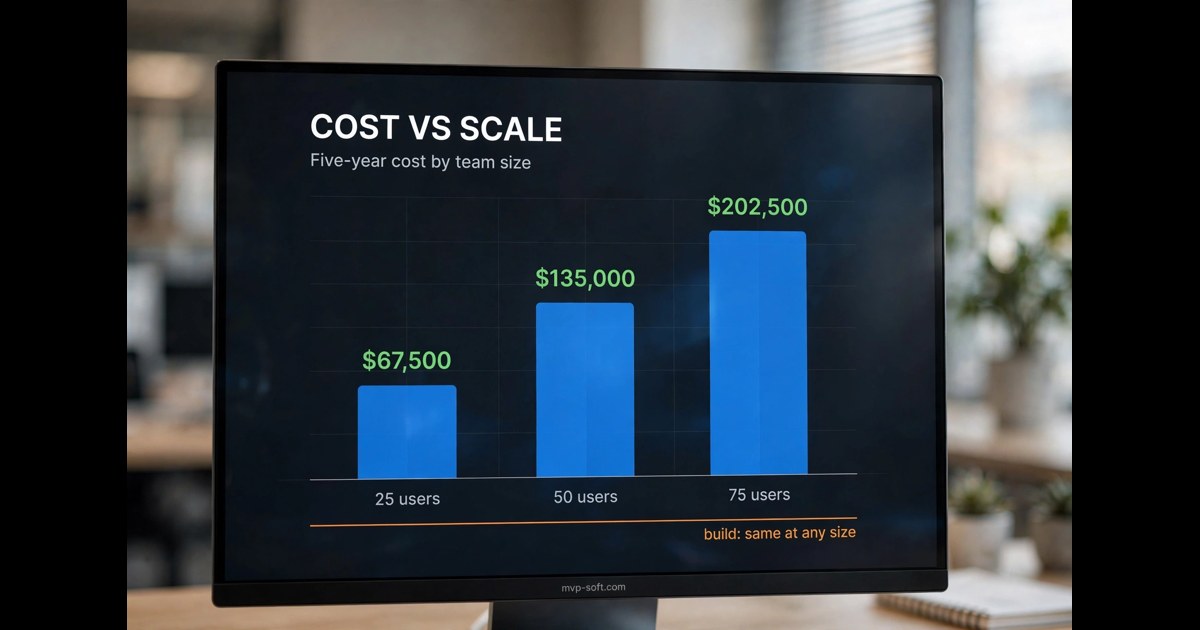
One published seat price, three sizes of company, five years: the staircase of per-seat pricing, the tier creep and price rises that steepen it, and the flat line of a build on the other side.
- SB-03: The Usual Suspects
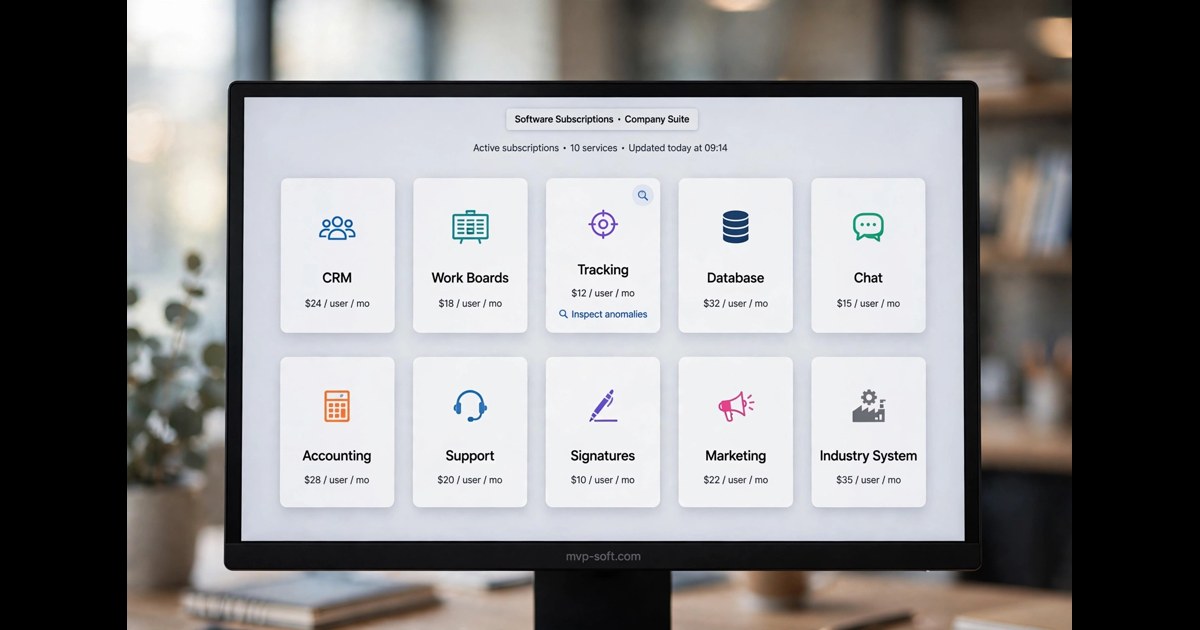
The ten categories almost every growing business rents, what each charges for, and which pricing model each uses. The model is where the traps live.
The Bridge
/ Operations
SB-12: Start With One Workflow
Part 12 of the SaaS or Build series, the finale. The argument is complete; this is the part where it becomes a decision.
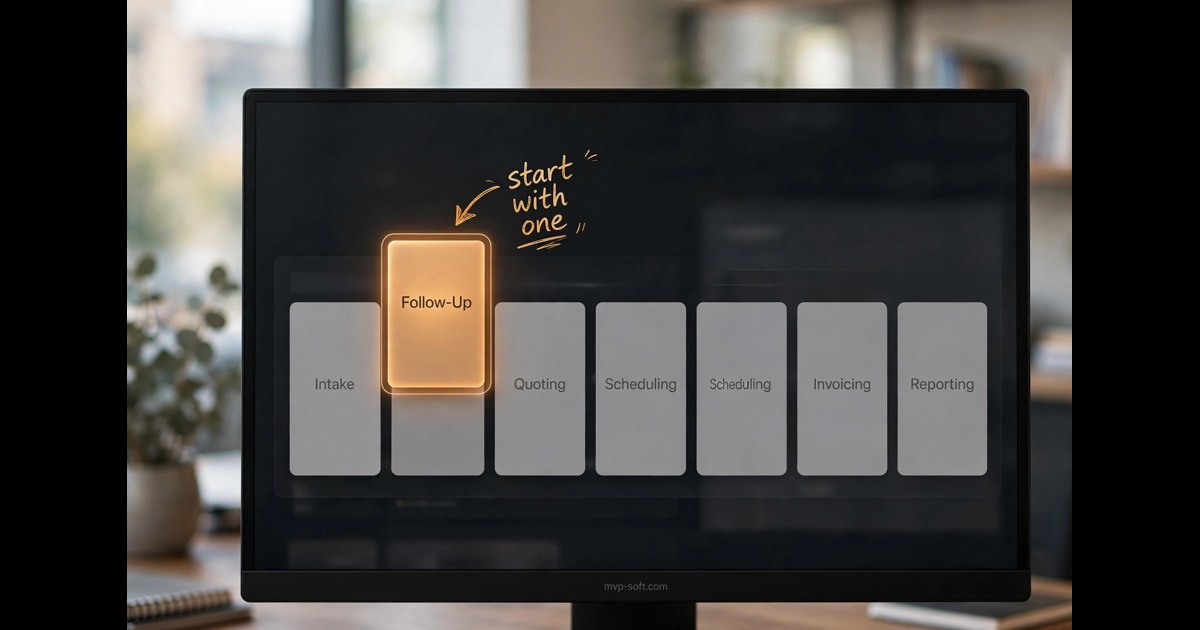
Twelve parts of arithmetic can paralyze as easily as persuade, so let me reduce the series to the smallest useful action. Do not replace your stack. Do not announce a transformation. Pick one workflow.
How to pick it
The right first workflow has four marks. It hurts weekly, not annually; somebody feels it every few days. It is surrounded by workarounds: the side spreadsheet, the export, the message thread where the real process lives. It carries a process that is yours, not the industry's template; if a competitor rented the same tool tomorrow they would not get this. And its rent, priced at the company you are becoming rather than the company you are, has a five-year column that makes you blink.
The examples in this series are the usual suspects for a reason: the work board, the follow-up machine inside the contractor CRM, the operations base, the portal your customers keep asking for. Your version of the list will have its own first entry. You already know which one it is; it is the tool your best people complain about in complete sentences.
What starting looks like
It starts with a specification, not a sales call: the functions the workflow must have, written the way the examples in this series wrote theirs, on a few pages a builder can price honestly. Then the build itself, weeks on the scale this series has used throughout, on your data, with AI built in where it earns its place rather than metered where it does not. Then the part nobody puts in the brochure: run it beside the rented tool until your people trust it, and cancel the seats with the confidence of a team that has already moved.
Ninety days after a good first build, the change is not the software. It is that the five-year column for that workflow stops growing, your process stops apologizing to a template, and your data starts living in one place where AI can reach it. Then you look at the second workflow with the eyes of a company that has done it once.
The doors
If you want the thinking before the building, take the Operational Clarity Self-Check and see where your operation says it stands. If your pain is the tracker shape from Part 11, write to me and I will set up a tenant; use it as much as you like. And if you have a workflow in mind and want the specification priced honestly, that is a conversation I am always willing to have, with the same rule as every engagement we take: work with us for 60 days, and if we are not the right fit, walk away and pay nothing.
The rent was never the enemy. Unexamined rent was: money leaving monthly for tools your company outgrew, in a decade when building the alternative quietly became the cheaper, smarter, more honest option. Examine it once a year. That is all this series asks.
Try this first
Free operational clarity check
Ten questions about how work actually moves through your operation. No call, no slide deck.
Talk to us
Talk to Us
If you want a second opinion on a specific decision, that conversation is free.