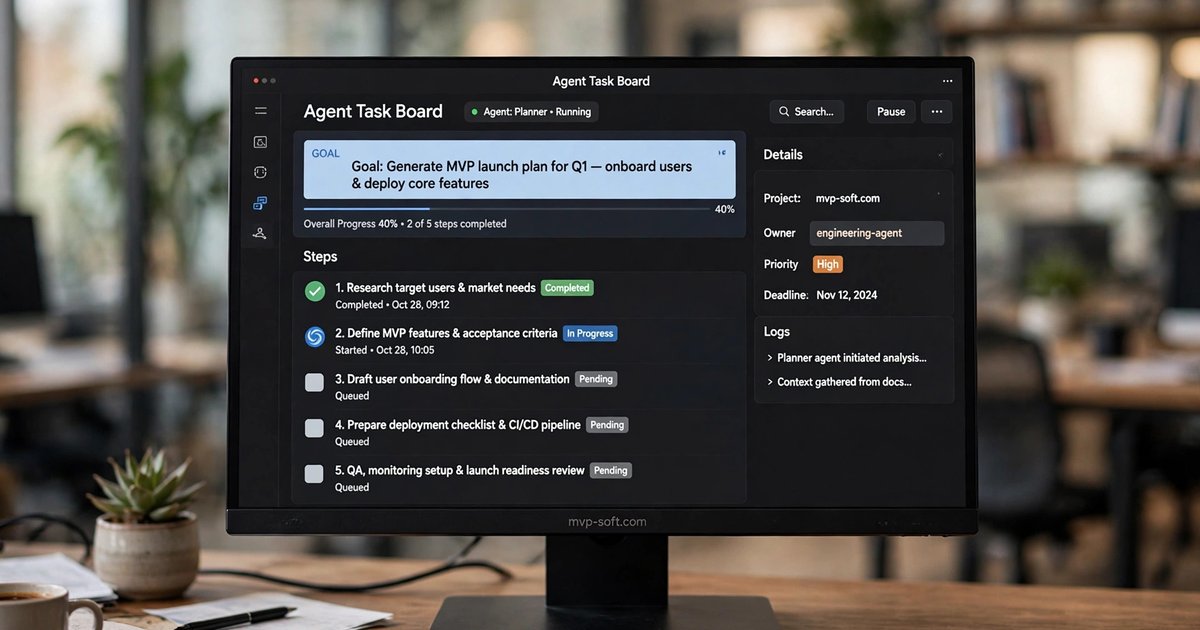
- AG-01: What Is an AI Agent? Software That Takes the Next Step
A chatbot gives an answer, while an AI agent works toward a defined outcome across several steps. This article explains how an agent uses instructions, company facts, and tools to act, and why a person still owns the goal and the result.
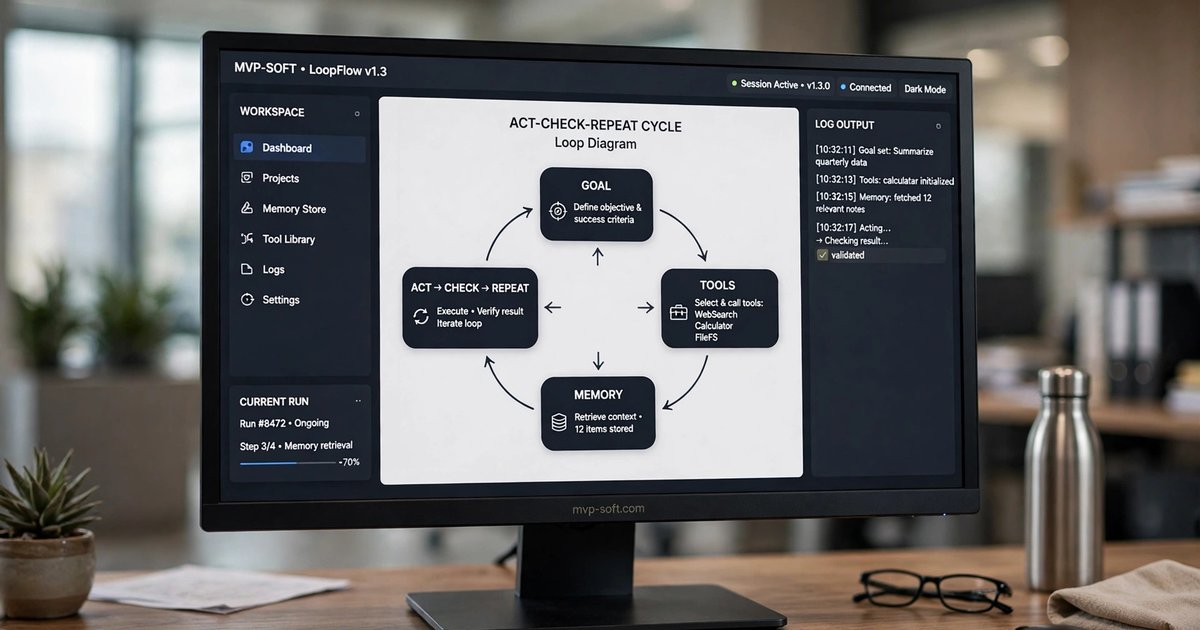
- AG-02: How an Agent Works: Goal, Tools, Memory, Loop
An agent is built from a clear goal, specific tools, a working record of what it has done, and a loop that acts, checks, and repeats. This article explains each part in plain language and shows why stop conditions and escalation are part of the design.
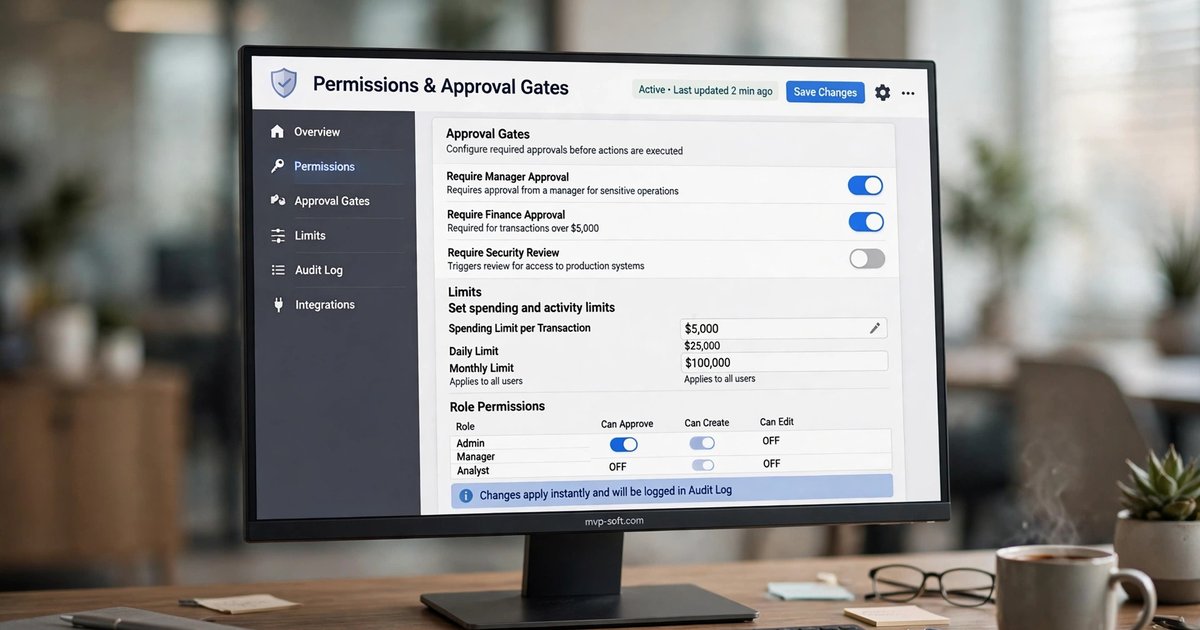
- AG-03: Agents Need Boundaries
Useful agents need permission limits, action limits, approval points, and logs that show exactly what happened. This article explains how those boundaries keep a mistake small and let a company expand an agent's work only after it proves reliable.
The Bridge
/ Technology & AI
AG-06: When an Agent Gets It Wrong
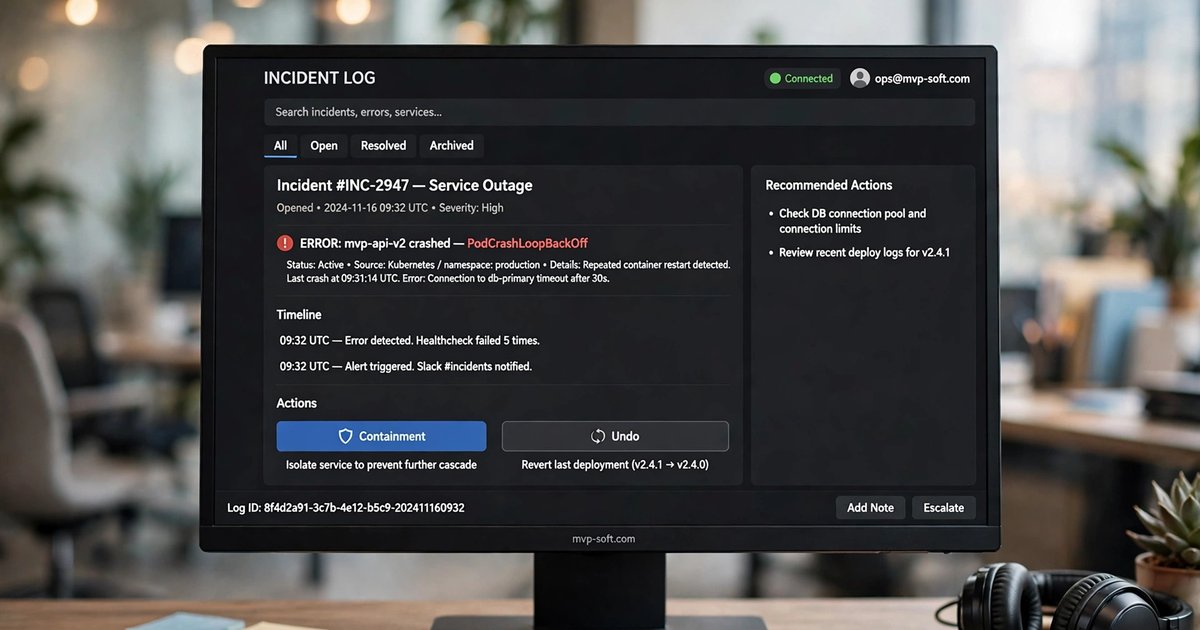
Part 6 of the Agents series. The examples showed useful work; this final part asks how that work fails and why the chain continues to Evaluation.
An agent can be wrong in a more dangerous way than a chatbot. A chatbot may give a bad answer that a person reads and rejects. An agent can act on a bad answer, then act again. It can call the wrong tool, update the wrong record, contact the wrong person, or repeat a flawed step at machine speed.
The answer is not to pretend this cannot happen. The answer is to design for the day it does.
The common failures
A wrong tool call often starts with a believable similarity. Two customers have almost the same name. A document number differs by one character. An old contact remains in the record after the person changed jobs. The agent chooses the match that looks right and moves on.
Loops are another failure. A required field stays empty, so the agent checks again. The result does not change, so it checks in a different way. Each step is reasonable by itself, but the job never reaches its stop condition and may create repeated tasks, messages, or charges.
The hardest failure is the confident mistake. The agent finds incomplete evidence, fills the gap with a plausible conclusion, and writes a clean summary. Nothing in the tone warns the reader that a key fact was missing. Fluency is not proof.
Containment comes first
Containment means a failure cannot travel far. Least access matters here: an agent that can read five fields cannot corrupt fifty. Approval points stop external or irreversible actions. Limits cap the number of records and messages affected.
Duplicate protection matters too. Each action should carry a marker tied to the case and step, so a retry does not send the same request twice or create the same task again. When a tool reports an unclear result, the agent should verify the current state before trying again. Repeating first and checking later is how faults multiply.
Stop conditions should be plain: too many attempts, conflicting records, missing authority, an unexpected amount, or a result outside the expected range. Any one of them can end the run and ask for help.
Logs, undo, and honest recovery
When something goes wrong, the log is the difference between an incident and a mystery. It should show the input, the evidence used, the tool calls, the outputs, and the changes made. A person should be able to answer three questions: what happened, what was affected, and what needs to be reversed.
Undo must be planned before it is needed. Some actions can be reversed directly. Some need a compensating action, such as a correction note or a follow up message. Some cannot be undone at all, which is why they belong behind approval in the first place. Backups and version history help with records, but they do not unsend a message or restore a customer's confidence.
Why evaluation comes next
Boundaries reduce the blast radius. Logs reveal the damage. Neither proves that the agent is doing good work week after week.
Somebody has to grade the work: whether the agent chose the right records, resolved only what it was allowed to resolve, escalated at the right point, and produced reports people can trust. That grading is Evaluation, the next step in the agentic workflow chain. Agents give software the ability to act. Evaluation gives a company a disciplined way to decide whether those actions deserve more trust, less trust, or none at all.
Try this first
Free operational clarity check
Ten questions about how work actually moves through your operation. No call, no slide deck.
Talk to us
Talk to Us
If you want a second opinion on a specific decision, that conversation is free.
Related