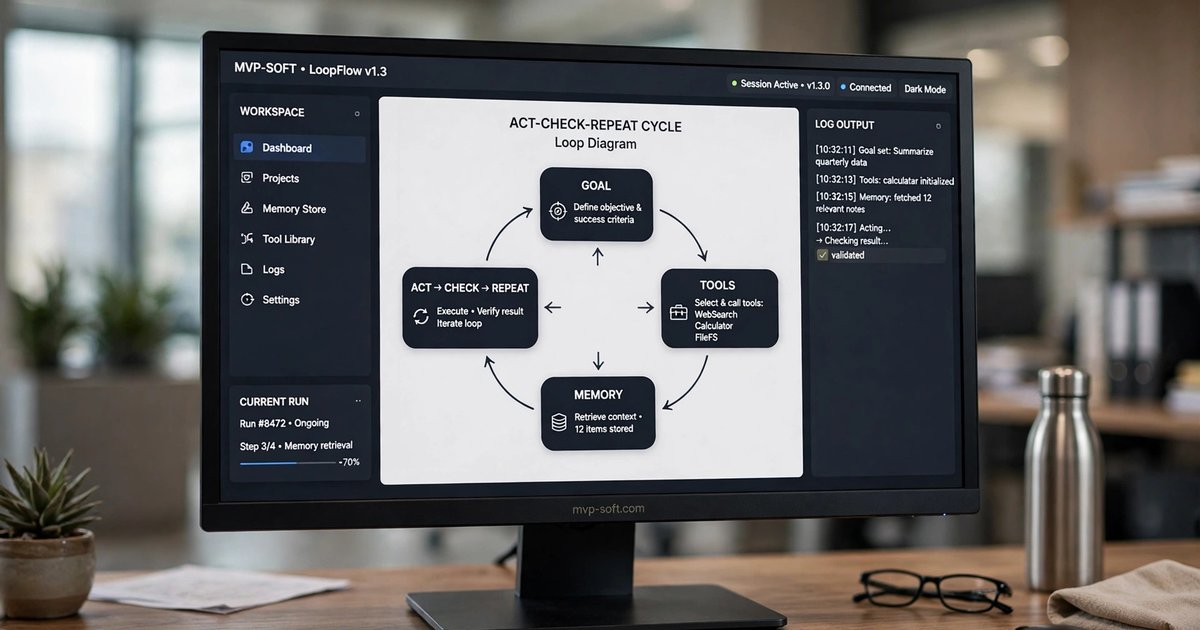
- AG-02: How an Agent Works: Goal, Tools, Memory, Loop
An agent is built from a clear goal, specific tools, a working record of what it has done, and a loop that acts, checks, and repeats. This article explains each part in plain language and shows why stop conditions and escalation are part of the design.
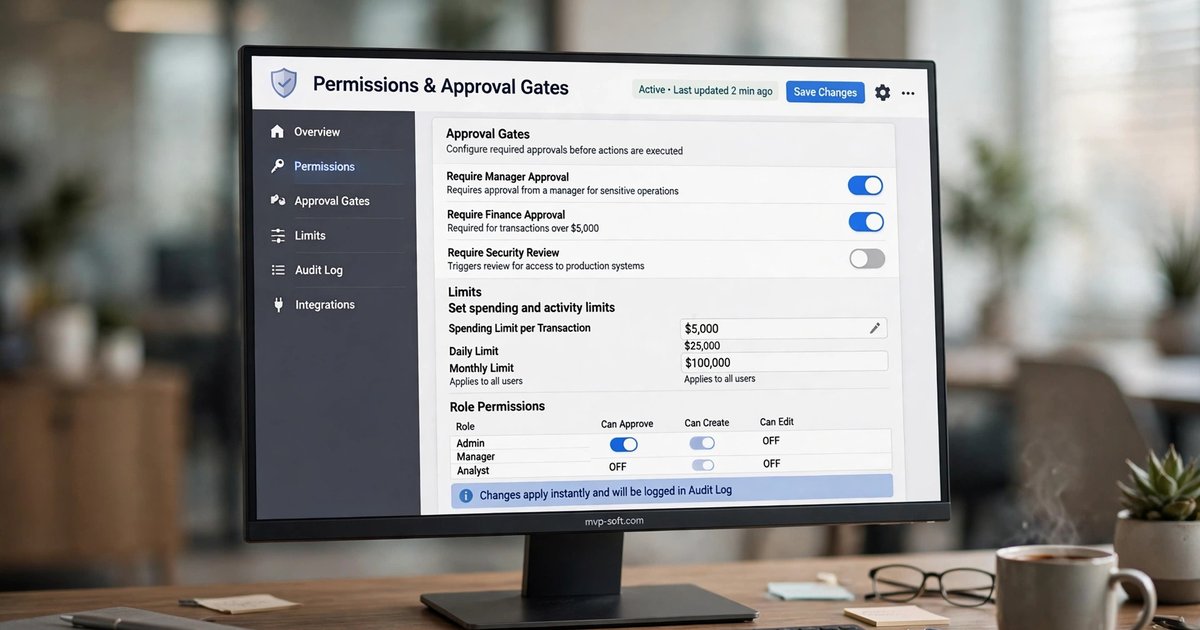
- AG-03: Agents Need Boundaries
Useful agents need permission limits, action limits, approval points, and logs that show exactly what happened. This article explains how those boundaries keep a mistake small and let a company expand an agent's work only after it proves reliable.
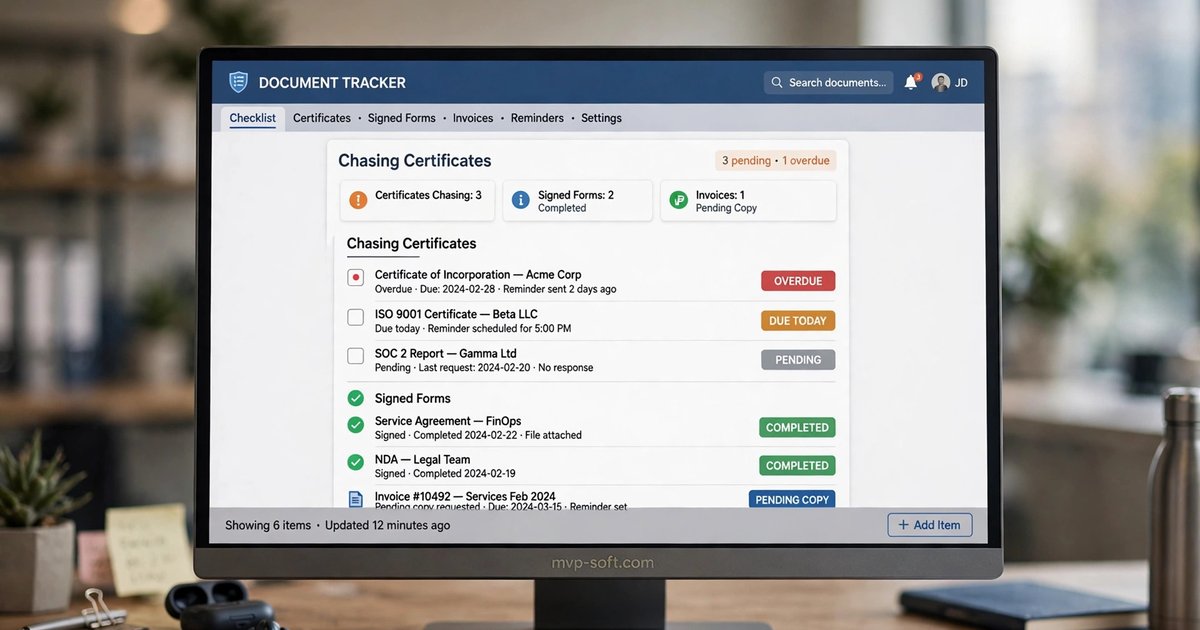
- AG-04: Example 1 of 2: Agents Chasing Paperwork
In this worked example, an agent watches for missing certificates, signed forms, and invoice copies, checks the agreed places, and sends a polite request when something is absent. It files what arrives, follows a calm reminder schedule, and gives a person the full history when the document does not come.
AG-01: What Is an AI Agent? Software That Takes the Next Step
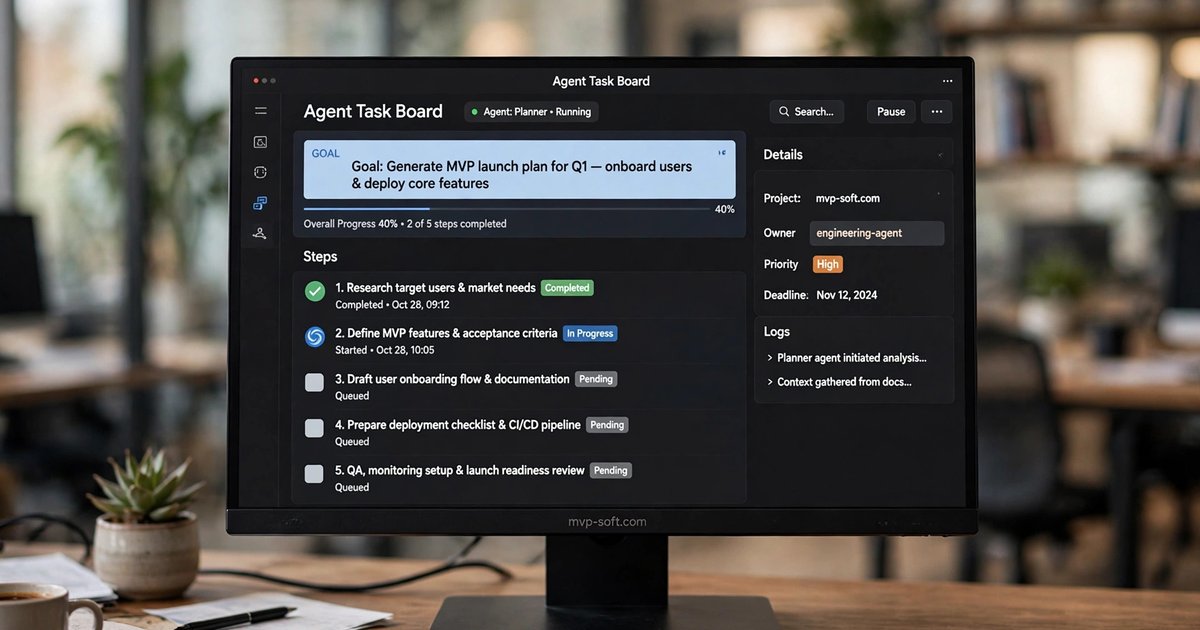
Part 1 of the Agents series. Prompting tells the model what to do, RAG gives it company facts, and an agent is where those instructions and facts start producing work.
A chatbot answers a question. An AI agent works toward an outcome.
That is the difference that matters. A chatbot can explain how to check whether a customer order is ready. An agent can be asked to prepare the order status, look up the order, check the related shipment record, notice that a required document is missing, draft a note to the person who can supply it, and report what still blocks the order. It does not stop after one reply. It takes the next step, then the next one allowed to it.
An agent is still software. It is not a new employee, a manager, or a mind of its own. It is a program that combines a language model with instructions, company information, tools, limits, and a way to report what it did.
More than a longer answer
The word agent is often used for any impressive chat. That makes the term almost useless. A useful test is simple: can the system pursue a goal across more than one step, use something outside the chat window, and come back with a result?
A chatbot receives a prompt and produces text. An agent receives a goal and works through a small plan. It may search records, read a document, compare two dates, open the right application, prepare a message, wait for a reply, and continue when new information arrives. If it cannot proceed, it should explain the obstacle instead of pretending the job is done.
Where prompting and RAG stop
Prompting is the instruction. It tells the model what is being asked, what rules apply, and what a good result looks like. RAG, the subject of the previous series, supplies relevant material from company documents before the model answers.
Neither one, by itself, follows the work after the answer appears.
Suppose the correct answer is, “The signed form is missing.” A prompted model can say that. A RAG system can find the record that proves it. An agent can then find the contact, prepare the request, record that the request was sent, watch for the reply, file the form when it arrives, and notify the owner if it does not.
That movement from knowledge to action is the new step. It is also why agents need much tighter controls than a chat window. Advice can be wrong without changing a company system. An action can send the wrong message, update the wrong record, or repeat a task many times before anyone notices.
A person still owns the result
A well designed agent does not receive a blank instruction such as “handle operations.” It receives a defined goal, the systems it may touch, the actions it may take, and the point at which it must stop and ask. A person remains accountable for the goal and for deciding whether the result is acceptable.
Think of the agent as software with a job description. The job can be useful without being unlimited. In fact, the narrower and clearer the job, the more likely the agent is to do it reliably.
Next, we take the agent apart: the goal, tools, memory, and loop that make this kind of work possible, and the brakes that keep the loop from running away.
Ten questions about how work actually moves through your operation. No call, no slide deck.
If you want a second opinion on a specific decision, that conversation is free.