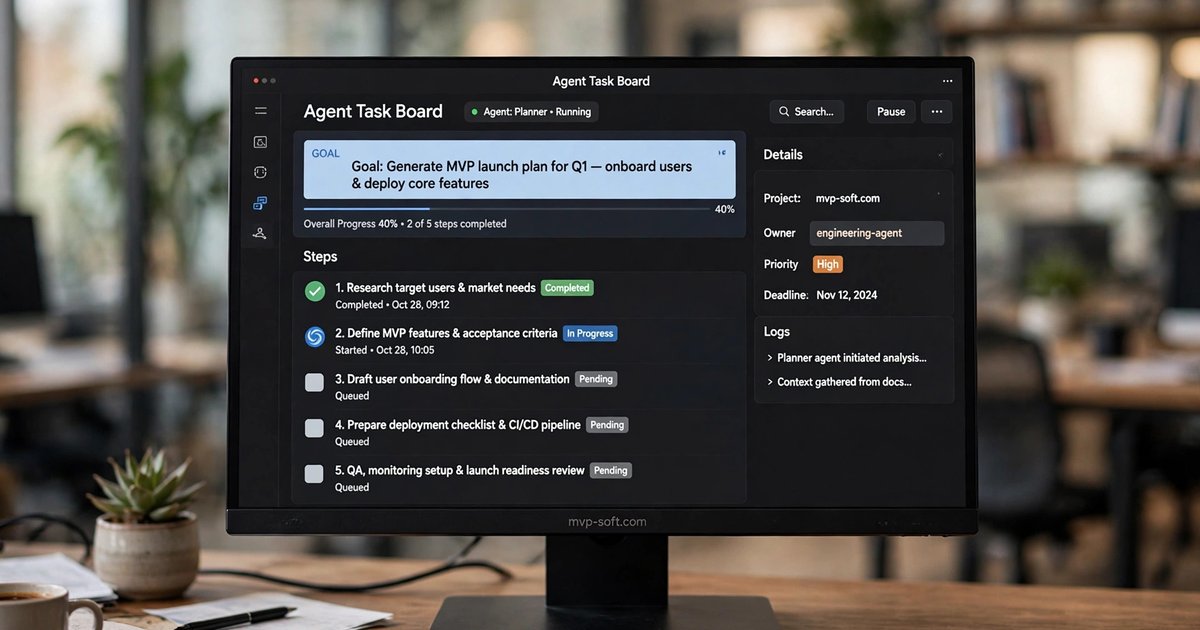
- AG-01: What Is an AI Agent? Software That Takes the Next Step
A chatbot gives an answer, while an AI agent works toward a defined outcome across several steps. This article explains how an agent uses instructions, company facts, and tools to act, and why a person still owns the goal and the result.
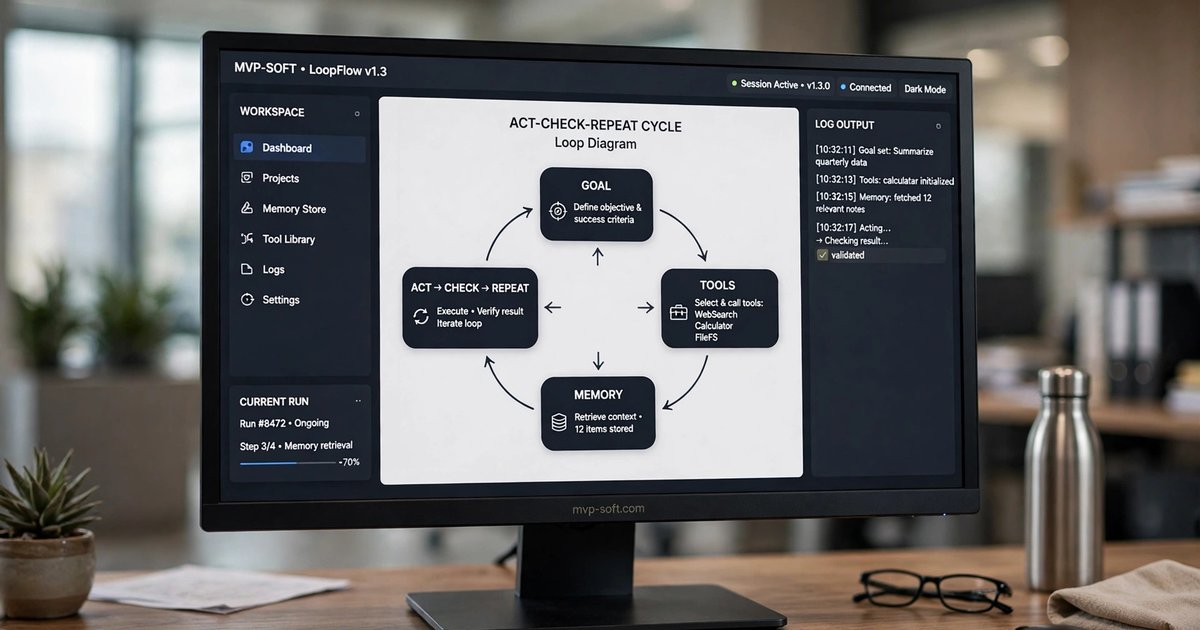
- AG-02: How an Agent Works: Goal, Tools, Memory, Loop
An agent is built from a clear goal, specific tools, a working record of what it has done, and a loop that acts, checks, and repeats. This article explains each part in plain language and shows why stop conditions and escalation are part of the design.
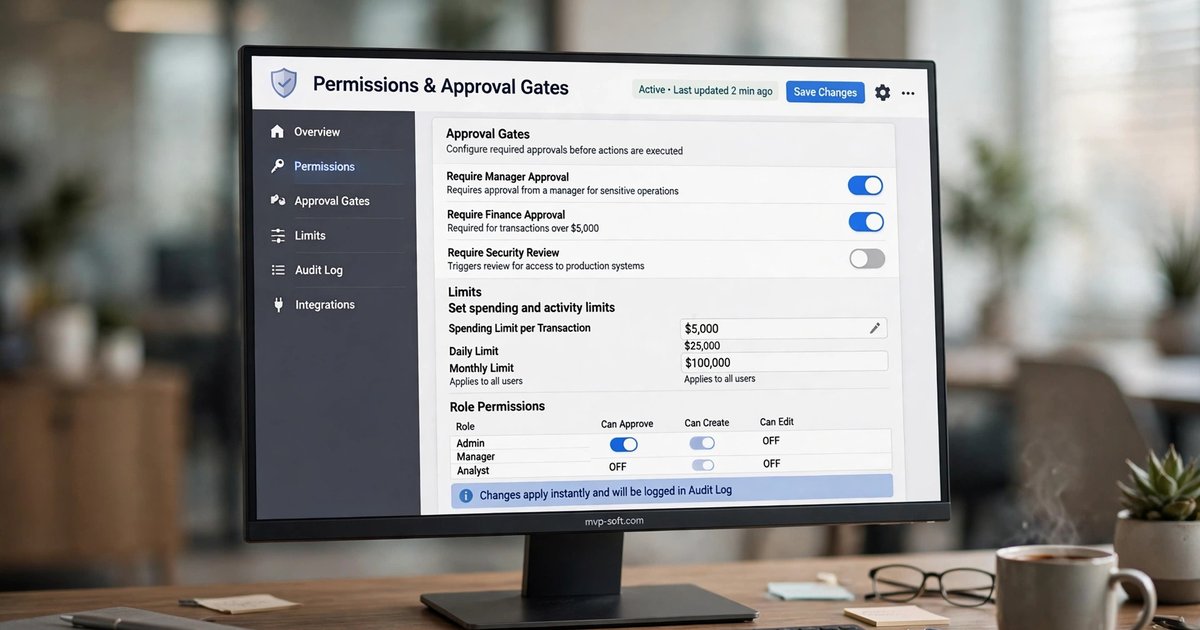
- AG-03: Agents Need Boundaries
Useful agents need permission limits, action limits, approval points, and logs that show exactly what happened. This article explains how those boundaries keep a mistake small and let a company expand an agent's work only after it proves reliable.
The Bridge
/ Technology & AI
AG-04: Example 1 of 2: Agents Chasing Paperwork
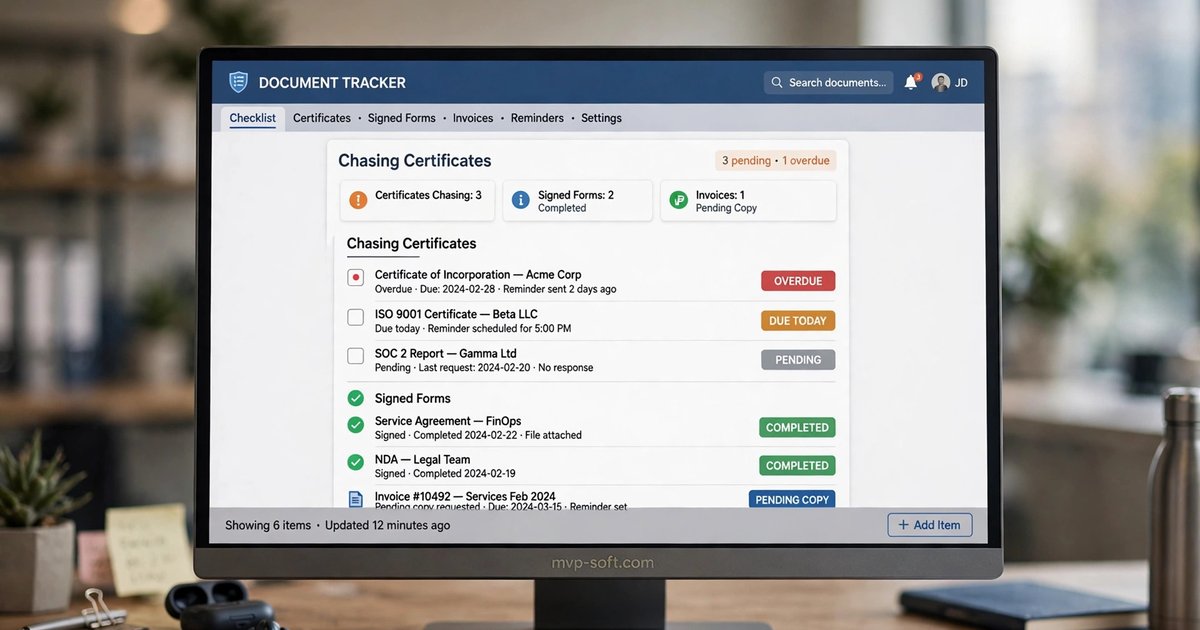
Part 4 of the Agents series. After the boundaries in Part 3, this first example gives an agent a narrow job: keep routine paperwork from going missing quietly.
Every operation has paper that matters only when it is absent. A vendor insurance certificate expires. A signed form never comes back. An invoice copy is needed before a file can close. Nobody wakes up excited to chase these items, so the chasing happens late, by hand, and usually after someone else discovers the gap.
This is a good first job for an agent because the work is clear, repetitive, and easy to verify.
The watch list
Start with a list the company already trusts: vendors who must provide a current certificate, customers with a signed form outstanding, or jobs that need a final invoice copy. Each item has an owner, a contact, a due date, and a place where the document should be filed.
The agent checks the list on a schedule. For each open item, it looks in the agreed places: the document folder, the business system, and the mailbox or intake channel the company uses. It is not searching the whole company. It is answering one question for one item: has the required document arrived, and is it the right one?
If the document is present, the agent files it in the proper place, records the date and source, and marks the item complete. If the file is unreadable, expired, unsigned where a signature is required, or clearly for the wrong company, the item stays open and the reason is recorded.
The polite chase
If nothing has arrived, the agent prepares a short request. It names the exact document, the related job or account, the due date, and where to send it. No vague “please send your paperwork.” No threat. No invented urgency.
The company can approve the wording once and let the agent fill in the details. The agent sends the request only if messaging is within its permissions. Otherwise, it places the prepared message in a review queue.
Then it waits. A follow up follows the schedule the company chose, perhaps after several business days, with the same calm wording and a reference to the first request.
When a reply arrives, the agent checks whether the attachment matches the open item. It files the document, updates the record, and tells the owner the gap is closed. If the reply contains a question the agent is not authorized to answer, the case goes to a person with the message attached.
Escalation is a result, not a failure
Some documents do not arrive. A contact has left. The vendor insists the item was sent. The certificate raises a coverage question. The form comes back signed by someone whose authority is unclear.
The agent should not argue, improvise, or keep asking forever. After the agreed number of attempts, it escalates. The handover includes the item, the contact history, every request and reply, and the reason the agent stopped. The person receiving it does not need to reconstruct the story from three inboxes.
What people still do
People choose which documents matter, approve the request language, judge questionable documents, and manage the relationship when a request becomes a disagreement. The agent carries the watching, matching, filing, and remembering.
It is not glamorous work. That is exactly why it is a sensible place to start.
The next example moves from missing inputs to conflicting records: the exception queue, where orders, invoices, and receipts disagree and somebody has to assemble the evidence before a decision can be made.
Try this first
Free operational clarity check
Ten questions about how work actually moves through your operation. No call, no slide deck.
Talk to us
Talk to Us
If you want a second opinion on a specific decision, that conversation is free.
Related