- AG-01: What Is an AI Agent? Software That Takes the Next Step
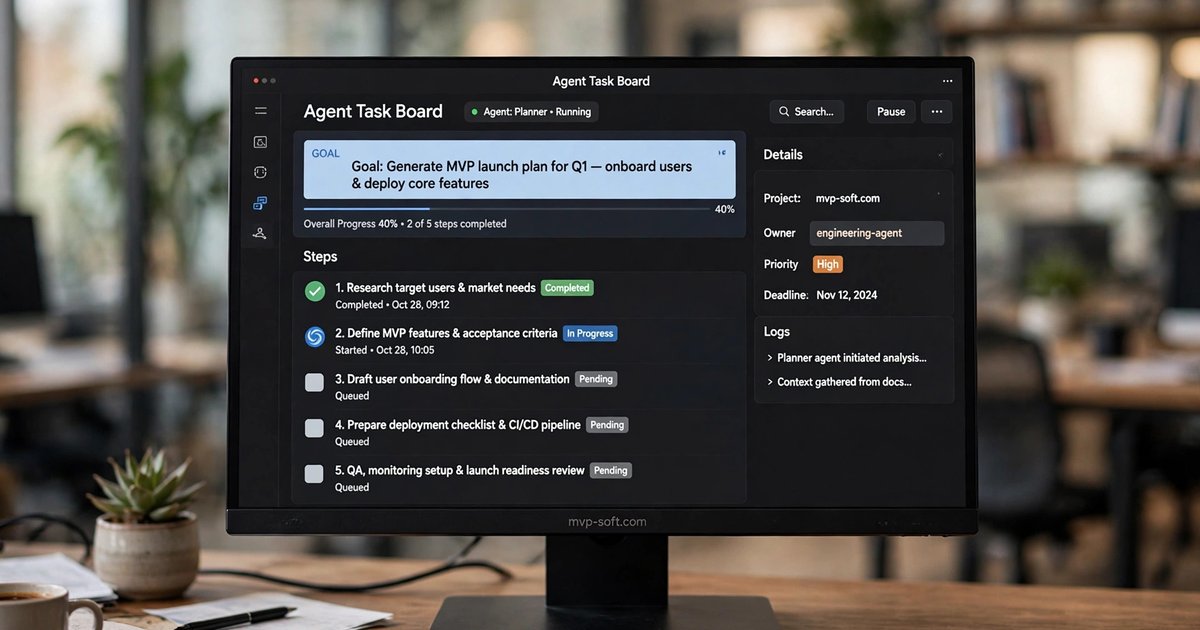
A chatbot gives an answer, while an AI agent works toward a defined outcome across several steps. This article explains how an agent uses instructions, company facts, and tools to act, and why a person still owns the goal and the result.
- AG-02: How an Agent Works: Goal, Tools, Memory, Loop
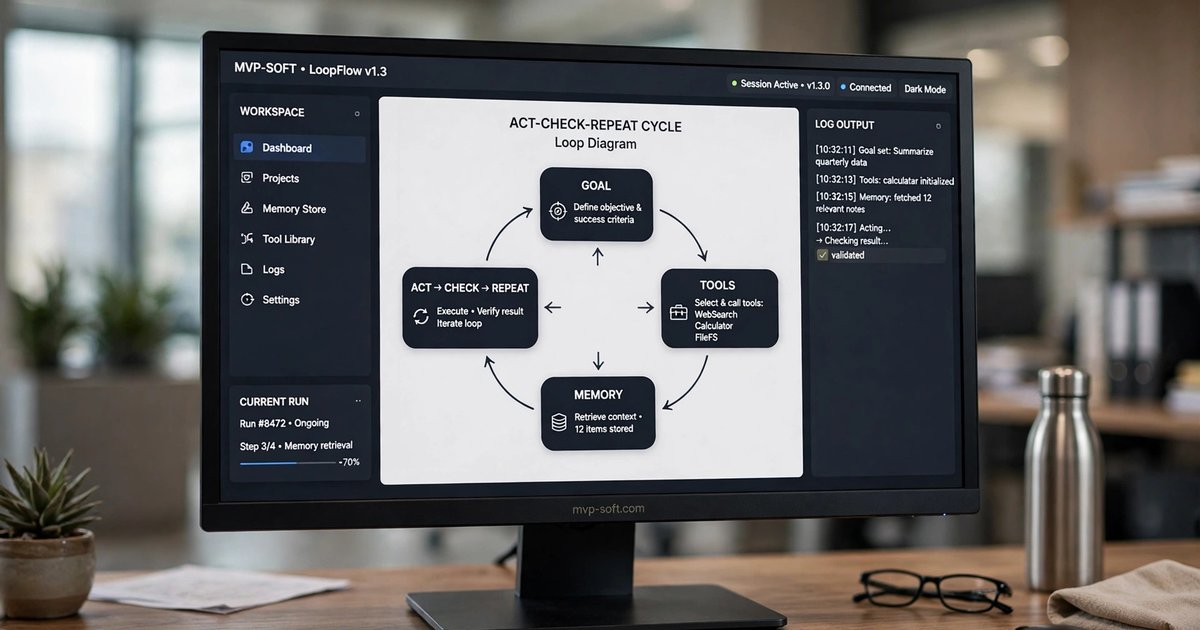
An agent is built from a clear goal, specific tools, a working record of what it has done, and a loop that acts, checks, and repeats. This article explains each part in plain language and shows why stop conditions and escalation are part of the design.
- AG-03: Agents Need Boundaries
Useful agents need permission limits, action limits, approval points, and logs that show exactly what happened. This article explains how those boundaries keep a mistake small and let a company expand an agent's work only after it proves reliable.
The Bridge
/ Technology & AI
AG-05: Example 2 of 2: Agents and the Exception Queue
Part 5 of the Agents series. The first example chased missing paperwork; this one gives the agent records that exist but refuse to agree.
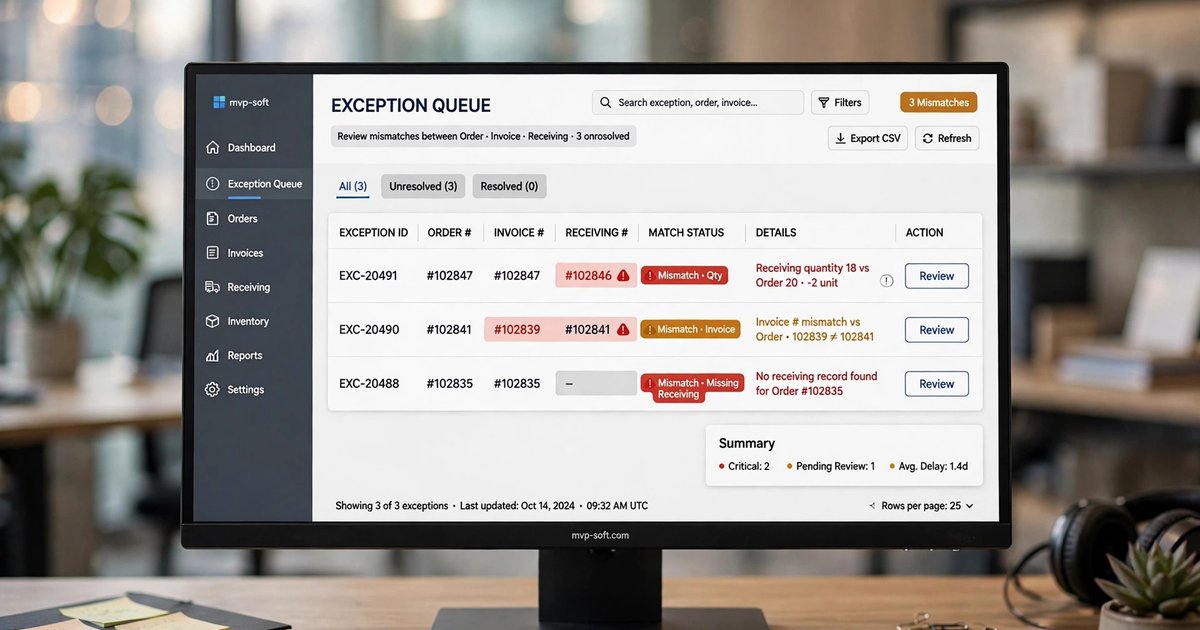
An exception is a record that cannot move forward because something does not match. The order says one quantity. The invoice says another. The receiving record is missing, the price changed, a tax line looks wrong, or the same invoice appears twice.
In many companies, exceptions live in a shared inbox, a spreadsheet, or the memory of the person who “usually handles those.” The facts are scattered across systems and email. Before anyone can decide, somebody has to gather the file.
That gathering is agent work.
Build the evidence packet first
For each exception, the agent collects the related order, invoice, receiving record, approval, contract terms if they apply, and messages that explain a change. It checks names, dates, amounts, quantities, and document numbers, then writes a short statement of the mismatch.
Not “problem with invoice.” Something useful: “Invoice 1842 charges 120 units. Purchase order 771 authorizes 100. The receiving record confirms 100. The extra 20 units are not explained in the attached messages.”
The packet matters more than the agent's conclusion. A person can decide quickly when the evidence is in one place and the difference is stated plainly. Without the packet, the same person spends the first half hour becoming a detective.
Resolve only the routine
Some exceptions are not really disputes. A receiving record was filed under a slightly different reference and can be matched with confidence. A duplicate alert was created because the same invoice was uploaded twice, while the underlying record is identical. A missing page is already present in another approved location and can be attached to the case.
An agent can resolve cases like these only under rules the company has written in advance. The rule should say what evidence is enough, what the agent may update, and what record it must leave. If identity, amount, or authority is uncertain, it is not routine.
Routine resolution is not about letting software be generous with company money. It is about clearing clerical mismatches whose answer is already proven by the records.
Queue the rest for a human
Everything else goes into an exception queue, sorted by reason and age. Price differences, quantity shortages, unexpected fees, damaged goods, and conflicting approvals wait for a person. The agent attaches the evidence, names the missing fact if there is one, and suggests the next action without taking it.
That suggestion could be to ask the supplier for a corrected invoice, request a receiving check, or confirm whether a price change was approved. The person still decides. The difference is that the decision starts at the decision, not at the search.
A calmer kind of automation
This example rarely makes a flashy demonstration. Nobody applauds a well assembled invoice packet. But operations improve in exactly these unglamorous places: fewer stalled records, less time hunting attachments, and a clear line between clerical resolution and human judgment.
The agent should be measured by the quality of its packets and the correctness of its sorting, not by how many exceptions it made disappear. A fast wrong closure is worse than a slower honest queue.
So far, the examples have assumed the agent follows the rules and reads the records correctly. The next and final part of this series removes that comfort: what happens when an agent gets it wrong, and how a company keeps the damage small.
Try this first
Free operational clarity check
Ten questions about how work actually moves through your operation. No call, no slide deck.
Talk to us
Talk to Us
If you want a second opinion on a specific decision, that conversation is free.
Related