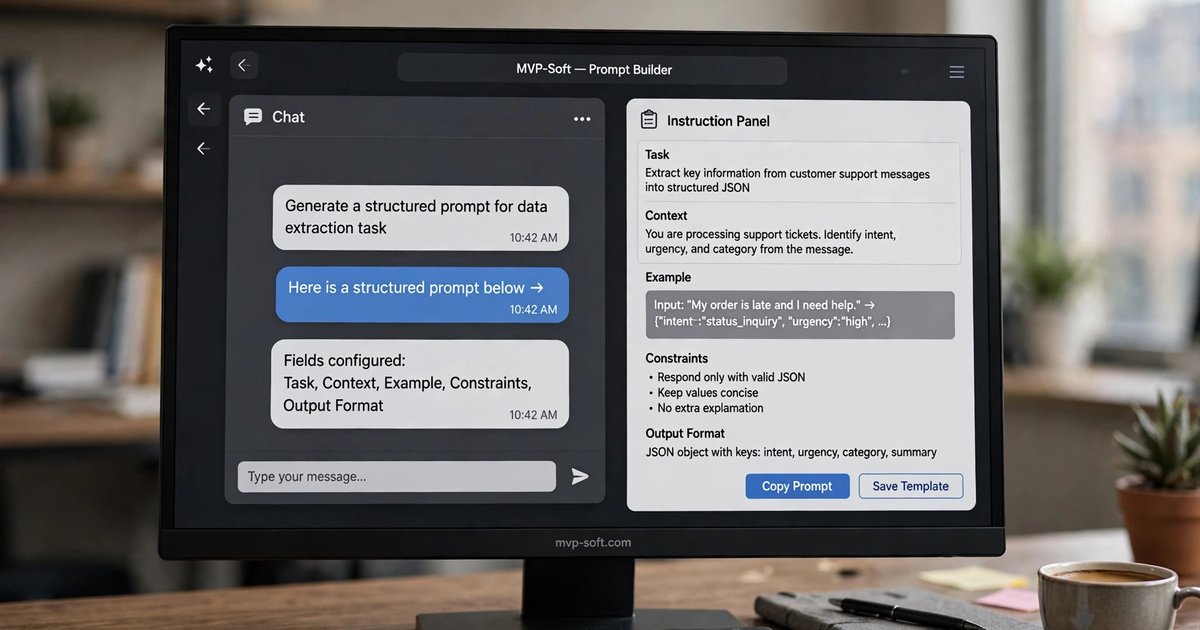
- PR-01: What Is Prompting? The Instruction Behind the Answer
Prompting is not typing a question into a box. It is giving an instruction with five parts: the task, the context, an example, the constraints and the output shape. This opening part explains why the same AI tool gives one person gold and another person mush.
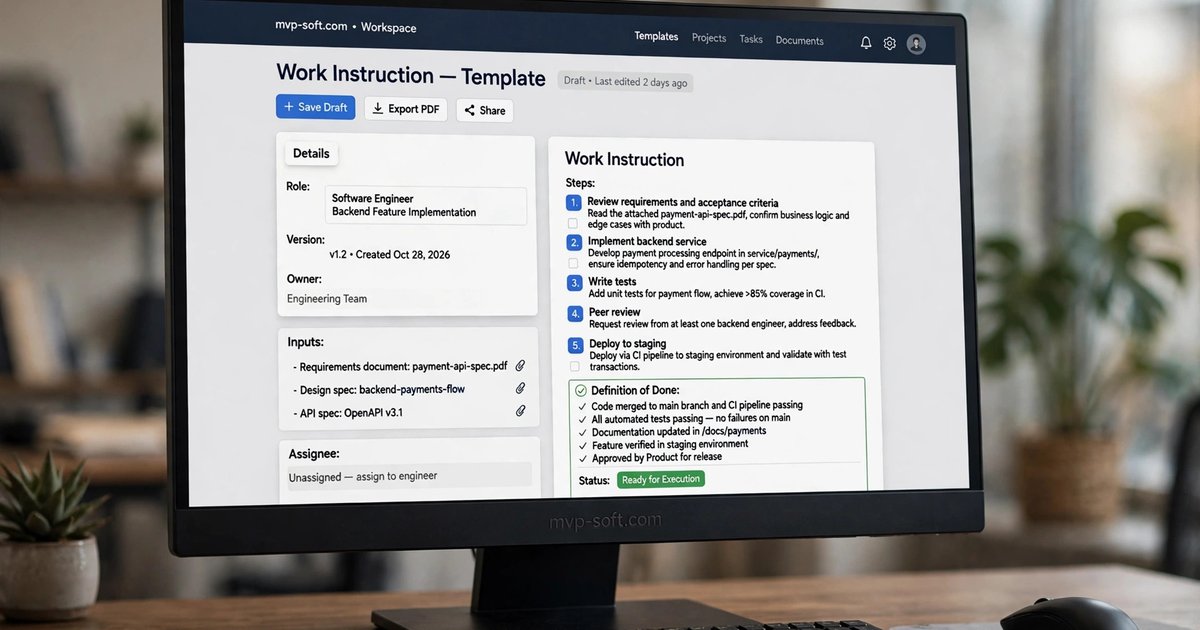
- PR-03: Write Prompts Like Work Instructions
A prompt is a work instruction for a very fast, very literal new hire. This part shows how to write one properly: role, inputs, steps, a clear definition of done, and an explicit instruction for what to do when unsure.
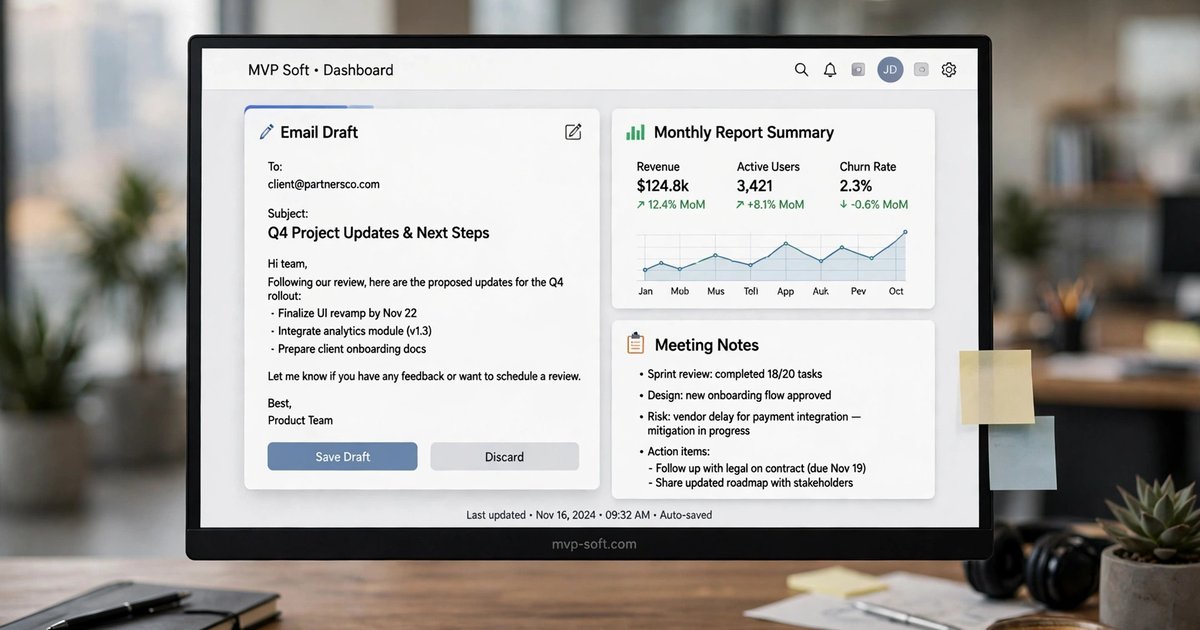
- PR-04: Prompting at Work: Email, Reports and Meeting Notes
Three everyday tasks shown twice, weak prompt first and then the same prompt written properly: a difficult customer email, a monthly report summary, and raw meeting notes. The difference in the output is the difference the instruction makes.
The Bridge
/ Technology & AI
PR-02: Prompting, Step by Step
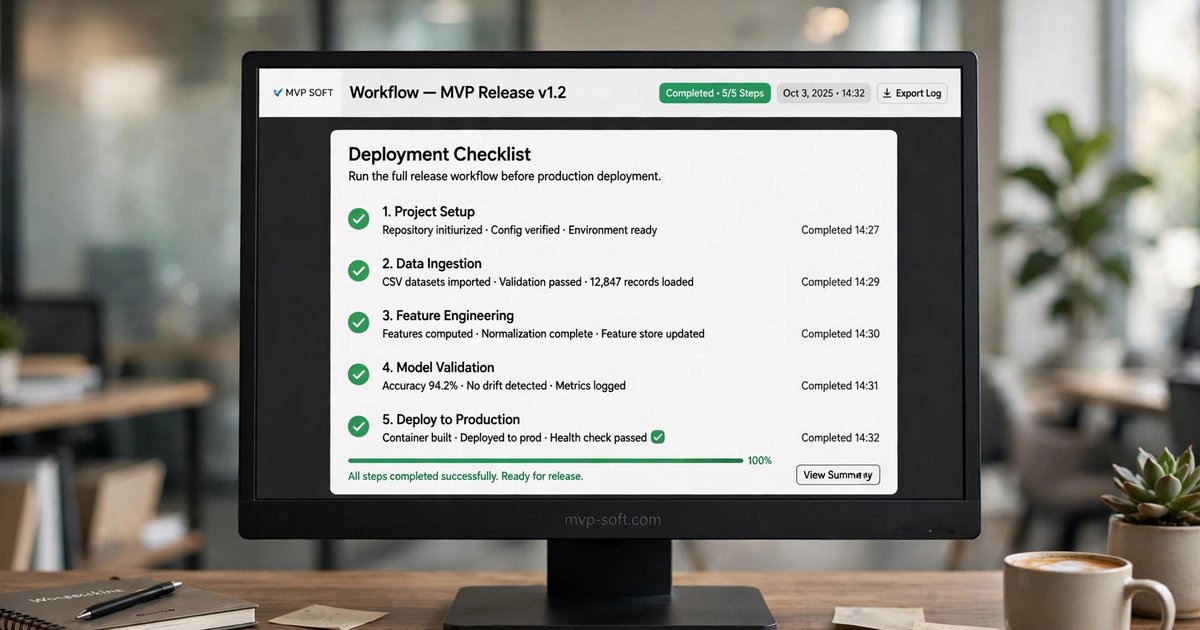
Part 2 of the Prompting series. Part 1 took a prompt apart into five pieces. This part puts them to work as a method, on one ordinary task from a real working day.
One task, done twice
Here is the task. A supplier has sent a long email thread about a delayed order: quotes, revised dates, two apologies, and a new price buried near the bottom. You need to brief your operations manager before a call in one hour.
The quick way people prompt: “Summarize this email thread.” The AI returns a tidy paragraph that mentions everything a little and the one thing that matters, the new price and the missed date, no more prominently than the apologies.
Now the same task run through five moves.
Move 1: Brief
State the job and the decision it feeds. “Write a short brief I can read in two minutes before a call with this supplier. The decision on the call is whether we accept the new delivery date or escalate.”
A brief tells the AI what the output is for. Everything it selects from the thread now has a test: does this help the decision or not?
Move 2: Context
Add what the AI cannot see. “We have ordered from this supplier for three years. The original date was October 15. A late delivery stops our own shipment to a customer on November 1.”
Context changes the ranking of facts. The delay is no longer one detail among many; it is the point.
Move 3: Example
Show the shape of a brief you liked before, even a short one. “Format it like this: Situation in two lines. What changed since the last email. What it costs us. What I should ask on the call.”
An example does more than any instruction like “be clear and structured,” because it shows the structure instead of naming it.
Move 4: Format
Fix the output before it is written. “Use those four headings, in that order. Keep the whole brief under 200 words. Put every date and every price in bold so I can find them while I am on the phone.”
Move 5: Check
Never take the first answer as finished. Ask the AI to check its own work against the source. “Go back through the thread. List any date or price in your brief that does not appear in the emails. Flag anything you inferred instead of found.”
This last move is the one most people skip, and it is the one that catches the confident little errors: the date from the first quote instead of the revised one, the price that quietly included shipping.
The habit, not the recipe
Brief, context, example, format, check. Five moves, in that order, and they take about two extra minutes on any task that matters. The brief you get back is shorter than the vague version, sharper, and built around the decision you actually have to make.
You may have noticed something. Those five moves look a lot like how you would brief a capable person before handing them the same thread. That is not a coincidence, and it is exactly where Part 3 goes: a prompt written the way you would write a work instruction for someone on your own team.
Try this first
Free operational clarity check
Ten questions about how work actually moves through your operation. No call, no slide deck.
Talk to us
Talk to Us
If you want a second opinion on a specific decision, that conversation is free.
Related