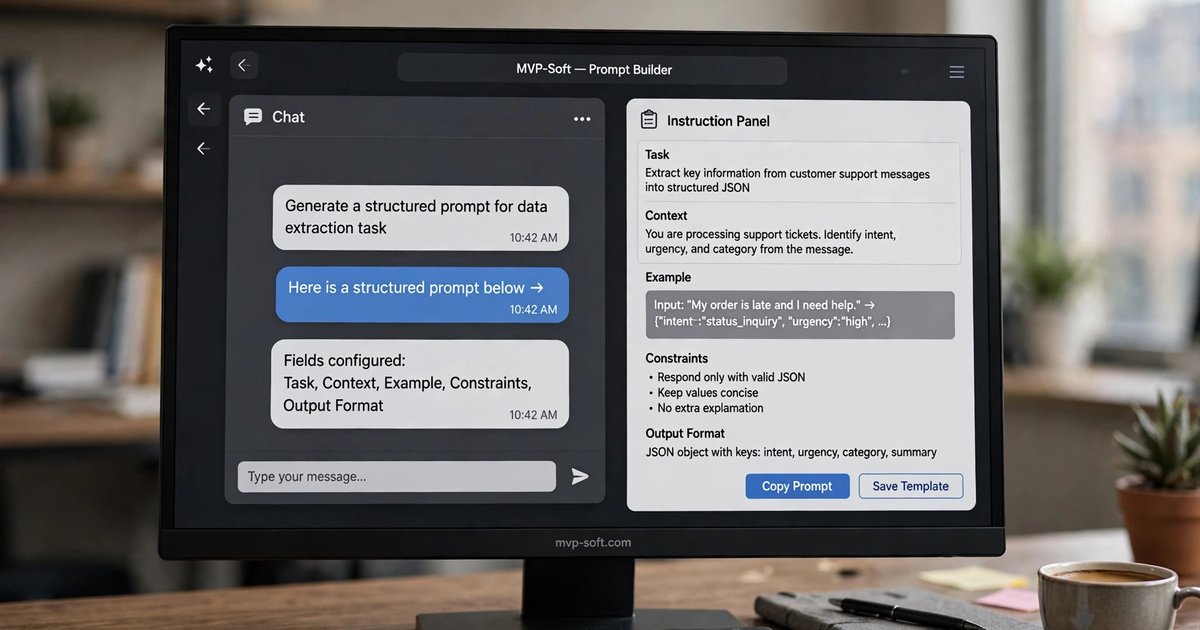
- PR-01: What Is Prompting? The Instruction Behind the Answer
Prompting is not typing a question into a box. It is giving an instruction with five parts: the task, the context, an example, the constraints and the output shape. This opening part explains why the same AI tool gives one person gold and another person mush.
- PR-02: Prompting, Step by Step
A working method in five moves: brief, context, example, format, check. One ordinary task, a supplier email thread before a difficult call, is run through all five moves so you can see what each one changes in the result.
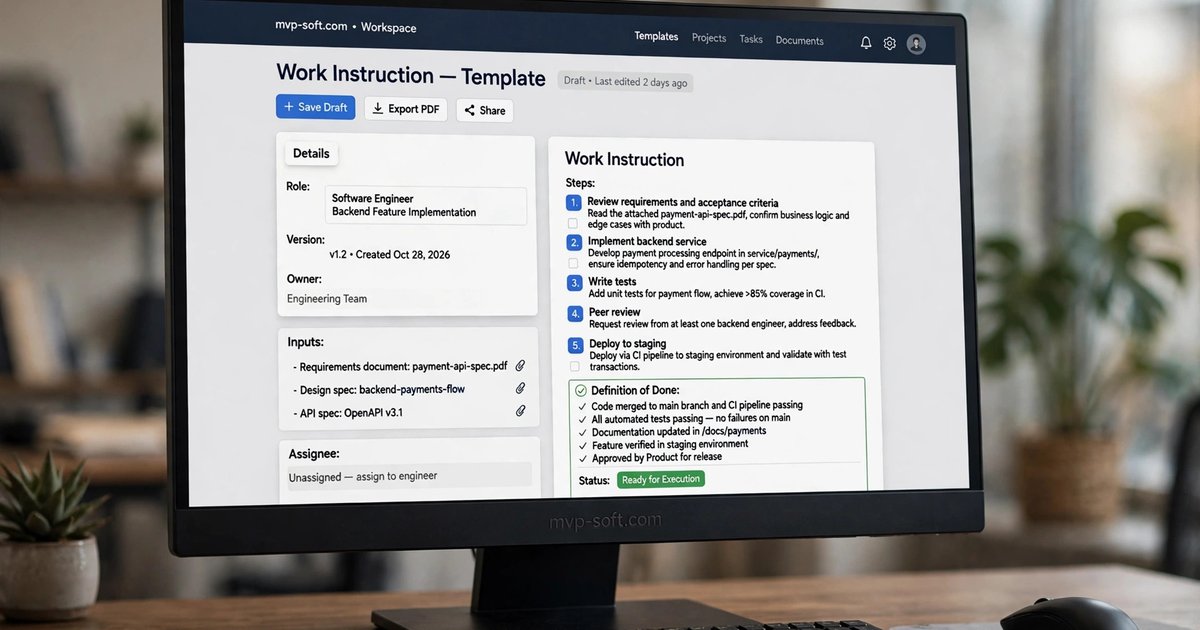
- PR-03: Write Prompts Like Work Instructions
A prompt is a work instruction for a very fast, very literal new hire. This part shows how to write one properly: role, inputs, steps, a clear definition of done, and an explicit instruction for what to do when unsure.
The Bridge
/ Technology & AI
PR-04: Prompting at Work: Email, Reports and Meeting Notes
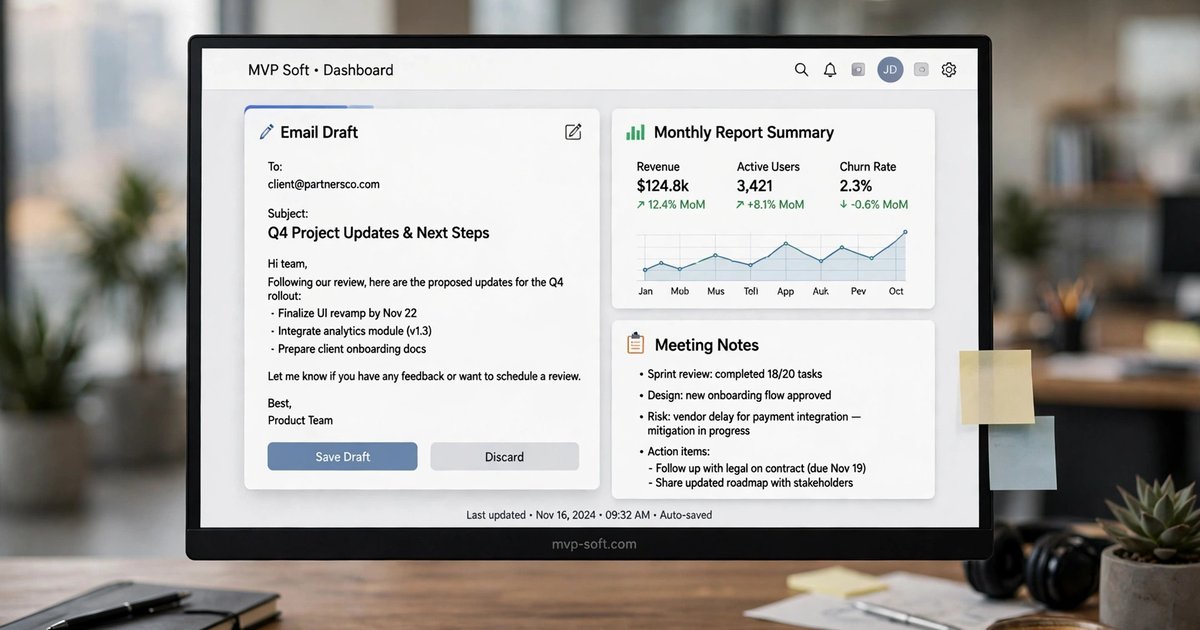
Part 4 of the Prompting series. Parts 1 to 3 built the method and the work instruction. This part shows both on the three tasks that fill most office days, with the weak version and the proper version side by side.
Example 1: The difficult email
Weak prompt: “Write an email to a customer about a delay. Make it professional.”
The result is polite, long, and says nothing a customer can act on. It apologizes three times and commits to no date.
Proper prompt: “Write an email to our customer about a delivery delay. Facts: the order was due Friday, the new date is Wednesday, the cause is a supplier part that arrived damaged. Apologize once, briefly. State the new date early. Offer one thing we will do to reduce the impact: split delivery of the finished items on Monday. Under 150 words, no marketing language.”
Same tool, same facts. The second email can actually be sent, because the instruction carried the facts, the limits and the shape.
Example 2: The report nobody reads
Weak prompt: “Summarize this monthly report.”
The result retells the report in order, at about the same effort as reading it. A summary that mirrors the document saves nobody anything.
Proper prompt: “From this monthly report, write a one page brief for the owner. Lead with the three numbers that moved most versus last month, and say whether each move is good or bad for us. Then list any commitment in the report with a date attached. Use only figures that appear in the report, and quote the page for each one.”
Now the output is a decision document, not a shorter copy of the original. The instruction decided what mattered before the AI started writing.
Example 3: Meeting notes
Weak prompt: “Clean up these meeting notes.”
Cleaned up is all you get: the same ramble, tidier. Decisions and owners stay buried where they fell.
Proper prompt: “Turn these raw notes into three sections. Decisions: each one in a single line. Actions: who owes what, with the date named in the meeting; write ‘no date given’ where none was. Open questions: anything raised and not settled. Drop small talk and repetition. Do not add any name or date that is not in the notes.”
Anyone who missed the meeting can now run their week from the output. The difference was not the AI. It was whether the prompt defined the product.
The pattern underneath
In all three cases the weak prompt named an activity: write, summarize, clean up. The proper prompt named a reader, a purpose, the facts to use, and the exact shape of the result. That is the whole method from Parts 1 to 3, doing its work on ordinary tasks.
There is one more thing these examples have in common. Every fact the AI needed was handed to it inside the prompt or the pasted text. When the facts live somewhere else, in your files, your systems, your documents, no wording fixes that. That is the honest limit, and it is where Part 5 goes next.
Try this first
Free operational clarity check
Ten questions about how work actually moves through your operation. No call, no slide deck.
Talk to us
Talk to Us
If you want a second opinion on a specific decision, that conversation is free.
Related